
Home › Blog › Inherited a House in Miami-Dade
Miami-Dade inherited homesInherited a House in Miami-Dade? Probate, Homestead, and Selling As-Is
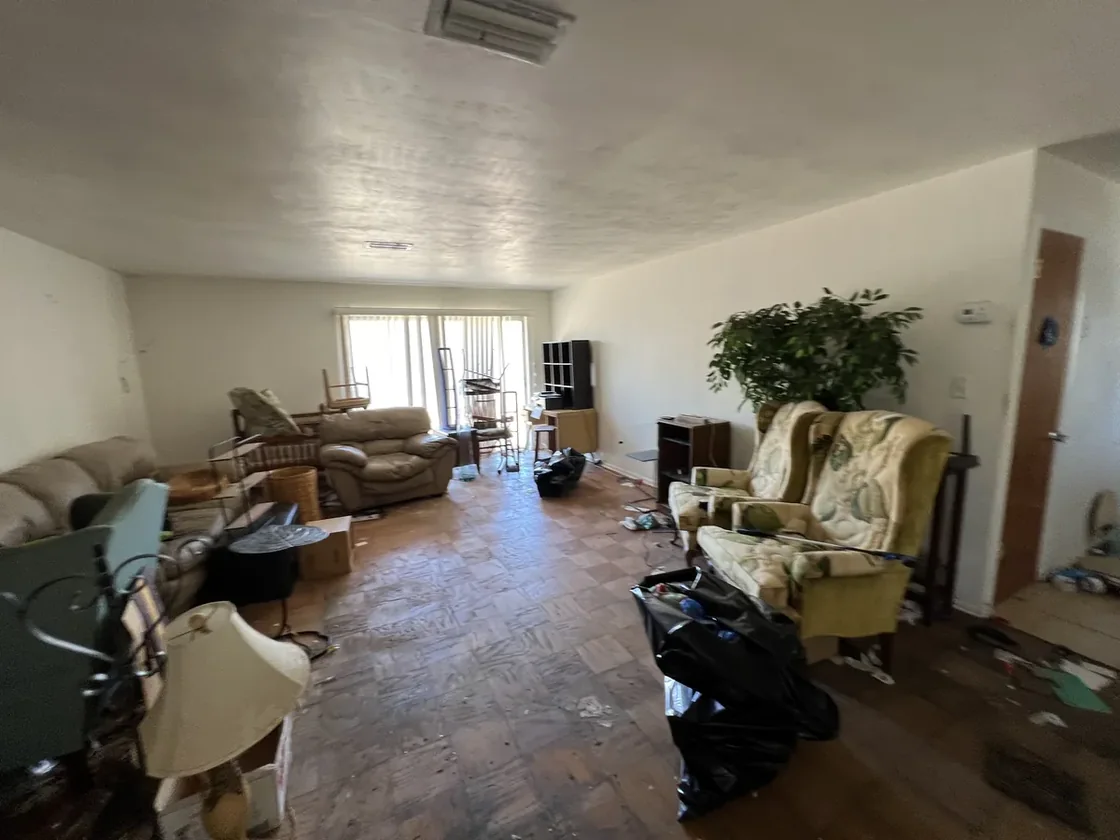
Usually it starts with a phone call and a set of keys. Mom’s house in Westchester, an uncle’s place off Flagler, the block house in Hialeah your grandparents bought when the street was half empty. Now it’s yours, or partly yours, and you’re standing in the living room looking at forty years of furniture wondering what you’re even allowed to do. In Miami-Dade the honest answer is: less than you’d think until the paperwork catches up, and more than you’d think once it does. Selling an inherited house in Florida runs on Florida’s own rules for who inherits a house, a homestead section in the state constitution that overrides a will, and a probate court that has to hand somebody the authority to sign a deed. Here is how it works in this county, with the real deadlines.
Key highlights
- Somebody has to have the power to sign. A will alone does not let anyone sell the house. That authority comes from the probate court, through summary or formal administration, or from an order determining homestead.
- Summary administration got bigger in 2026. Under the current statute it covers estates up to $150,000, after exempt property is set aside, or any estate where the person died more than 2 years ago.
- Homestead follows its own rules. If the owner left a spouse or a minor child, the Florida Constitution limits who can receive the house by will, and a surviving spouse now has 6 months to make the one-half election.
- The house keeps costing money while you wait. Property taxes are due November 1, the homestead exemption usually ends the next January 1, and insurance and utilities still need paying.
- An as-is sale is ordinary here. Heirs sell inherited Miami-Dade houses full of furniture and with original plumbing all the time. The title company pays off whatever is owed at closing and the rest goes to the estate.
The short answer
Don’t sign anything with a buyer until you know who has the legal right to sell. In Miami-Dade that means a probate case in the Eleventh Judicial Circuit, unless the house was already set up to pass outside probate (a joint deed with survivorship, a living trust, or a lady bird deed). For many families with one main asset, summary administration is now on the table, because the 2026 statute raised the ceiling to $150,000 of non-exempt property. If the house was the person’s homestead, the court can determine that it passed straight to the heirs, which is often faster still. While that runs, keep the house insured, keep the taxes in view, and decide whether anybody actually wants to live there. If nobody does and the house needs work nobody wants to fund, selling it as-is is a normal and clean way to close the chapter.

See your number. Then decide.
You get a written cash offer within 12 hours of our call, with the comps behind it. No obligation, no pressure.
- No fees or commissions
- Sold as-is
- You pick the date
Who owns the house right now
Start with how the deed was titled, because that decides whether probate is even part of the story. A house held by a married couple as tenants by the entirety goes to the surviving spouse automatically. A house in a living trust goes to whoever the trust says, through the trustee. A house in one person’s name alone, with no trust behind it, goes through probate or a court order. That last one is the common case in the older parts of Miami-Dade.
Then comes the Florida twist. Article X, section 4(c) of the Florida Constitution says the homestead shall not be subject to devise if the owner is survived by a spouse or minor child, except that it may be devised to the spouse if there is no minor child. In plain words: if Dad left a wife or a child under 18, his will cannot simply leave the house to whoever he chose. The law decides.
When the constitution blocks the will, section 732.401 takes over. A surviving spouse takes a life estate in the homestead, and the children (the decedent’s descendants) take the remainder. Instead of the life estate, the spouse may elect to take an undivided one-half interest as a tenant in common, with the other half going to the descendants. Here’s the part that changed and that older guides still get wrong: the current statute says that election must be made within 6 months after the death, during the spouse’s lifetime, by recording a notice in the county’s official records. Once made, it can’t be undone.
Why this matters for a sale. A life estate split from a remainder is very hard to sell. A buyer needs every owner’s signature: the spouse for the life estate and every child for the remainder. If the spouse wants to sell, the one-half election usually makes it simpler, because then there are just co-owners. That election clock is short. If a parent died in Miami-Dade in the last few months, talk to a probate lawyer about it this month, not next year.
How probate works in Miami-Dade
Probate in Miami-Dade runs through the probate division of the Circuit Court of the Eleventh Judicial Circuit, and filings go through the Clerk of the Court. Florida gives you three practical routes, and which one fits depends on the size of the estate and how long ago the person died.
Small estates, for very little money. The Miami-Dade Clerk’s probate page describes a small estates petition the office can help with, but only when the assets are $6,000 or less and do not exceed the funeral bill. A house almost never fits under that, so for a home the real choices are the next two.
Summary administration. Under section 735.201 it’s available when the value of the entire estate subject to administration in Florida, less property exempt from creditors’ claims, does not exceed $150,000, or when the decedent has been dead for more than 2 years. In a will case, the will also must not require formal administration. The ceiling used to be $75,000, and plenty of articles online still quote that number. A Florida homestead is generally protected from creditors, so a house that was the person’s residence is often handled through a determination of homestead alongside a small summary case. Summary administration has no personal representative and ends in an order that distributes the property directly to the people entitled to it.
Formal administration. This is the full process. The court appoints a personal representative, issues letters of administration, and the representative publishes a notice to creditors. Under section 733.702, creditors have until the later of 3 months after the first publication or 30 days after they are served to file claims. The representative can sell a house that isn’t protected homestead, often with the court’s approval, and the money goes into the estate to pay claims before anything is distributed. If nobody opens probate at all, section 733.710 sets an outer wall: 2 years after the death, the estate, the representative and the beneficiaries are generally no longer liable for claims against the person who died, with exceptions for creditors who filed in time and for some secured debts like a mortgage.
What it costs to file is set by section 28.2401: the clerk may charge up to $340 for summary administration of an estate worth $1,000 or more, $230 for one under $1,000, and $395 for formal administration, plus small service charges. Those are the court’s fees. A lawyer is the bigger number, and for anything beyond the simplest case you’ll want one.
For how long all this takes and who signs at each stage, we go deeper in selling a house in probate, and the statewide picture is in selling an inherited house in Florida.
What the house costs you while you wait
An empty house in Miami doesn’t sit still. The bills keep coming, and some of them change because the owner died.
- Property taxes. Under section 197.333, Florida property taxes are due November 1 and become delinquent April 1 of the following year. Paying in November earns the biggest early-payment discount. If the estate can’t pay, the bill doesn’t vanish; it turns into a tax certificate, which we explain in behind on Florida property taxes.
- The homestead exemption. The Miami-Dade Property Appraiser says that if an owner dies after January 1, the exemption may be inherited for that year, as long as the house was the person’s permanent residence on January 1. It lasts only until the next January 1. After that, a new owner who lives there has to file an original application, and the deadline is March 1. If nobody moves in, expect next year’s bill to be noticeably higher, because the exemption and the Save Our Homes cap fall away.
- Insurance. Call the carrier early and tell them the owner died. Many homeowners policies treat a house that sits vacant for a long stretch differently, and a claim on a vacant house you never reported is a bad conversation to have after a storm.
- Utilities, lawn and the city. Keep the power on for the air conditioning (Miami humidity and a shut house are how mold starts), keep the grass cut, and watch the mail for code notices. A small violation left alone can become a lien, and our Miami-Dade code violations guide walks through how that happens here.
The house itself: older Miami stock
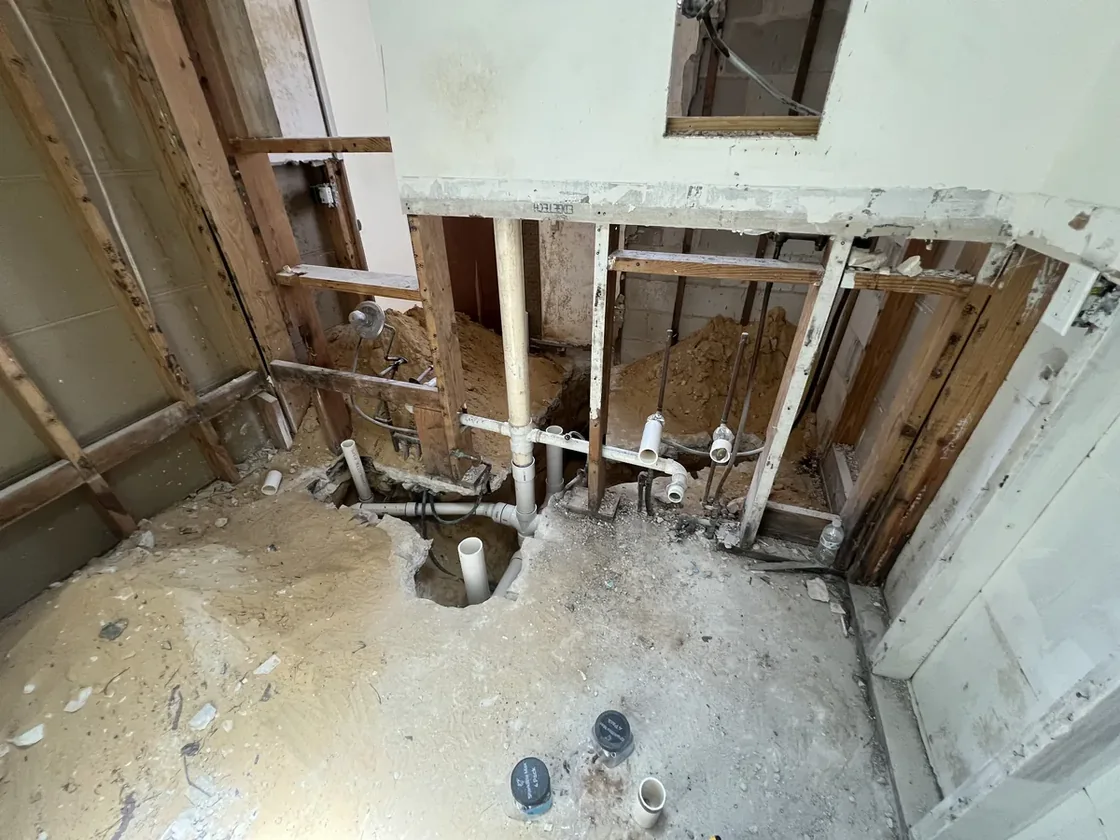
A lot of inherited houses in Miami-Dade were bought decades ago and lived in by the same person ever since. That’s the good news for equity and the hard news for condition. The roof may be past what an insurer wants to see, the electrical panel may be original, the kitchen and bathrooms are often from another era, and the drain lines under the slab are the original ones. In a house built before the mid-1970s those lines are very often cast iron, which Insurance Journal describes as common in homes built before 1975. Cast iron rusts and scales up inside over the decades, and many homeowners policies exclude or limit water damage from old pipes. In older Miami houses we often find those lines worn out, and replacing them means opening floors, which is exactly what the photo shows.
None of that stops a sale, but it shapes who can buy. A mortgage lender needs an appraisal and insurance it accepts. A cash buyer doesn’t. That difference is why the price you hear from an agent and the price you hear from a cash buyer are often far apart, and why both can be honest.
Florida also asks every seller of residential property for two written disclosures at or before the contract. Section 689.261 requires a property tax summary warning the buyer not to rely on the seller’s current taxes, since a change of ownership triggers a reassessment. Section 689.302 requires a flood disclosure saying whether the seller knows of flooding that damaged the property during their ownership, filed a flood insurance claim, or received flood assistance such as FEMA aid. As an heir you may know very little about the house’s history. Answer honestly with what you know, and say so plainly when you don’t.
Taxes when you sell an inherited house
Here’s a piece of good news people often miss. Under the IRS rules in Publication 551, the basis of inherited property is generally its fair market value on the date of death (or on the alternate valuation date if the personal representative chooses it). If Grandma paid $40,000 for the house in 1978 and it was worth $500,000 when she died, your starting point is $500,000, not $40,000. Sell soon after for about that much and there’s often little or no capital gain to report. Florida has no state income tax on individuals, so the federal return is the one that matters.
What Miami-Dade houses are selling for
The Miami REALTORS September 2026 report for single-family homes in Miami-Dade County shows 824 closed sales, down 4.7% from a year earlier, at a median price of $692,000, up 4.1%. Of those sales, 216 were paid in cash, up 7.5%. The median listing went under contract in 41 days and closed in 80. Active listings fell 16.6% to 4,536, which is 5.1 months of supply. Only 3 foreclosure or bank-owned houses closed that month, at a median of $410,100, against 819 traditional sales at $694,400.
For context, Florida REALTORS counted 20,537 single-family closings statewide in September 2026 at a median of $415,000, and 5,743 of them were cash. Miami-Dade is one of the most expensive counties in the state, which is why an inherited house here is often the biggest thing an estate owns. An original-condition house with a 1970s kitchen sits well below it, and a renovated one on the same street sits above it.
Your options, side by side
Five real paths for an inherited Miami-Dade house, and what each one really costs:
| Your option | Best when | The trade-off |
|---|---|---|
| Move in and keep it | One heir wants to live there and can cover taxes, insurance and repairs | Everyone else’s share has to be bought out or agreed; a new homestead application is due by March 1 |
| Keep it as a rental | The house is in decent shape and the heirs agree on who manages it | No homestead exemption, landlord insurance, repairs before a tenant moves in, and co-owners who may disagree later |
| Fix it up, then list it | The estate has cash for repairs and time to wait | Contractors, permits and months of carrying costs before the listing, then agent commission and buyer repair requests |
| List it as-is with an agent | The house is dated but solid and a financed buyer can get insurance | Showings with the family’s things inside, inspection renegotiation, and a loan that can fail on the roof or the plumbing |
| Sell as-is for cash | Nobody wants the house, it needs work, or the heirs just want it settled | The price reflects the condition, but there are no repairs, no cleanout, no commission and the closing date fits the probate timeline |
How an as-is cash sale works here
The process is short on purpose. You tell us about the house honestly, including where the probate case stands and whether there’s a mortgage or any unpaid taxes, and you get a written cash offer, usually inside about 24 hours. You can accept it before the court paperwork is finished. The contract is simply written so closing waits for the letters of administration, the summary administration order or the order determining homestead, whichever applies.
Once that order exists, a Florida title company does the heavy lifting. It reviews the probate file to confirm who must sign, gets every heir or the personal representative to the closing table (in person, by mail or by remote notary), orders payoffs for any mortgage, reverse mortgage or tax certificate, and pays them out of the proceeds. Whatever is left goes to the estate or straight to the heirs in the shares the court set. There’s no lender, so no appraisal, no inspection repair list and no financing that falls apart in week five. You take the photos, papers and furniture you want, and you leave the rest. Cleanout is our problem.
If you want to compare that with listing, our guide to what you lose selling as-is runs the numbers on both sides honestly.
How Sterling Home Offer helps
We buy single-family houses for cash across Florida, and inherited houses in Miami-Dade are some of the most common ones we see. You get a no-obligation cash offer in about 24 hours, based on the actual house and real nearby sales, strictly as-is, with no agent commission and no fees. We work around the court’s schedule rather than asking you to rush it, and we’re happy to talk to your probate lawyer. More about how we handle estates is on our inherited house page, and the local picture is on our Miami cash buyer page. If you’d rather talk it through, call (888) 260-1777.
The bottom line
An inherited house in Miami-Dade comes with two clocks. The legal one is set by Florida law: 6 months for a spouse’s homestead election, 3 months for creditors after the notice, 2 years for the outer limit on claims, and a summary administration that now reaches $150,000. The money one runs on taxes, insurance, utilities and a house that ages faster when it’s empty. Get the right person the authority to sign, keep the house covered while you decide, and then pick the path that fits the family, not the one that feels least awkward to bring up at dinner.
Sources
- Constitution of the State of Florida, Article X, section 4(c): the homestead shall not be subject to devise if the owner is survived by a spouse or minor child, except that it may be devised to the spouse if there is no minor child (The Florida Senate)
- Florida Statute 732.401, Descent of homestead: a surviving spouse takes a life estate with the remainder to the descendants, or may elect an undivided one-half interest as a tenant in common, within 6 months after the death, by a recorded notice that is irrevocable (The Florida Senate)
- Florida Statute 735.201, Summary administration: available when the estate subject to administration, less exempt property, does not exceed $150,000 or the decedent has been dead for more than 2 years (The Florida Senate)
- Florida Statute 733.702, Limitations on presentation of claims: claims are due by the later of 3 months after first publication of the notice to creditors or 30 days after service on the creditor (The Florida Senate)
- Florida Statute 733.710, Limitations on claims against estates: 2 years after death, the estate, personal representative and beneficiaries are generally not liable for claims against the decedent (The Florida Senate)
- Florida Statute 28.2401, Service charges in probate: up to $340 for summary administration of an estate of $1,000 or more, $230 under $1,000, and $395 for formal administration (The Florida Senate)
- Probate Court: small estates petitions require assets of $6,000 or less that do not exceed the funeral bill; larger estates should consult an attorney (Miami-Dade Clerk of the Court)
- Homestead change of status: an exemption may be inherited for the year of death until the next January 1, after which a new owner must file an original application by March 1 (Miami-Dade Property Appraiser)
- Florida Statute 197.333, When taxes due; delinquent: due November 1 and delinquent April 1 of the following year (The Florida Senate)
- Florida Statute 689.261, Sale of residential property; disclosure of ad valorem taxes: the summary must be given at or before the contract (The Florida Senate)
- Florida Statute 689.302, Disclosure related to flood risk: the seller discloses known flood damage, flood insurance claims and federal flood assistance at or before the contract (The Florida Senate)
- Report on cast iron pipe claims in Florida: cast iron drainpipes are common in homes built before 1975, can rust and build up internal deposits, and many homeowners policies exclude or limit water damage from them (Insurance Journal, 2022)
- Publication 551, Basis of Assets, Inherited Property: basis is generally the fair market value on the date of death or the alternate valuation date (Internal Revenue Service)
- Monthly Market Summary, September 2026, Single-Family Homes, Miami-Dade County: 824 closed sales (down 4.7%), 216 paid in cash, median sale price $692,000 (up 4.1%), median time to contract 41 days and to sale 80 days, 4,536 active listings, 5.1 months of supply, 3 foreclosure or bank-owned sales at a median of $410,100 (Miami REALTORS, Florida REALTORS data)
- Monthly Market Summary, September 2026, Single-Family Homes, Florida: 20,537 closed sales, 5,743 paid in cash, median sale price $415,000 (Florida REALTORS)
Inherited house in Miami-Dade FAQs
Can I sell an inherited house in Miami-Dade before probate is finished?
You can sign a contract before it’s finished, but nobody can close until someone has legal authority to sign the deed. That authority comes from letters of administration naming a personal representative, a summary administration order, or an order determining homestead from the Eleventh Judicial Circuit probate court. A cash buyer can write the contract so closing waits for that order, which lets you lock in the sale while the paperwork finishes.
Does a small estate in Miami-Dade still need probate?
Usually some court step is needed for a house. The Clerk’s small estates petition only covers assets of $6,000 or less that don’t exceed the funeral bill, which almost never includes real estate. Summary administration under section 735.201 is the shorter path: it covers estates where the non-exempt property is $150,000 or less, or where the person died more than 2 years ago. A house that was the person’s homestead is generally exempt from creditors and can often pass by an order determining homestead.
My father left the house to me in his will, but my stepmother is still alive. Who owns it?
If the house was his homestead and he left a surviving spouse, Article X, section 4(c) of the Florida Constitution generally stops him from leaving it to anyone but her, unless he had a minor child, in which case he couldn’t leave it by will at all. Under section 732.401 she takes a life estate and his descendants take the remainder, unless she elects within 6 months of the death to take a one-half interest as a tenant in common instead. Exceptions exist, such as a valid prenuptial waiver, so a probate lawyer should read the actual documents.
What happens to the homestead exemption after the owner dies?
The Miami-Dade Property Appraiser says that if the owner dies after January 1, the exemption may be inherited for that year, provided the house was the person’s permanent residence on January 1. It ends at the next January 1. An heir who moves in and makes it a permanent residence has to file a new application by March 1. If nobody does, the next tax bill is usually higher because the exemption and the assessment cap are gone.
Will I owe capital gains tax when I sell?
Often very little. IRS Publication 551 says the basis of inherited property is generally its fair market value on the date of death, or on the alternate valuation date if the personal representative elects it. If you sell for close to that value, the gain is small or zero. Keep a date-of-death appraisal with the estate papers, and check your own case with a tax professional.
The house is full of my mother’s things. Do we have to empty it before selling?
Not for a cash sale. Take the photos, papers, jewelry and furniture the family wants, and leave the rest. We buy the house as-is with whatever is still inside and handle the cleanout after closing. A buyer using a mortgage usually expects the house empty and may ask for repairs after the inspection, so emptying it is part of the cost of that route.
Related guides
This article is general information, not legal, tax or financial advice. Florida statutes, probate rules and county practice all change, and every estate and property is different. Read your own deed, will and court papers, and confirm your situation with a licensed Florida attorney before making decisions about your home.
One step left
Get your number. Then decide.
Two minutes now. Your number in writing within 12 hours of our call.
P.S. You don't have to decide anything today. Get your number, compare it with what an agent would get you, then decide. Moving help is limited each month.Nothing to decide today. Get your number, compare it with an agent's, then decide. Moving help is limited each month.