
Home › Blog › Code Violations in Miami-Dade
Miami-Dade code liensSelling a House With Code Violations in Miami-Dade: Liens, Unsafe Structures, and As-Is Buyers
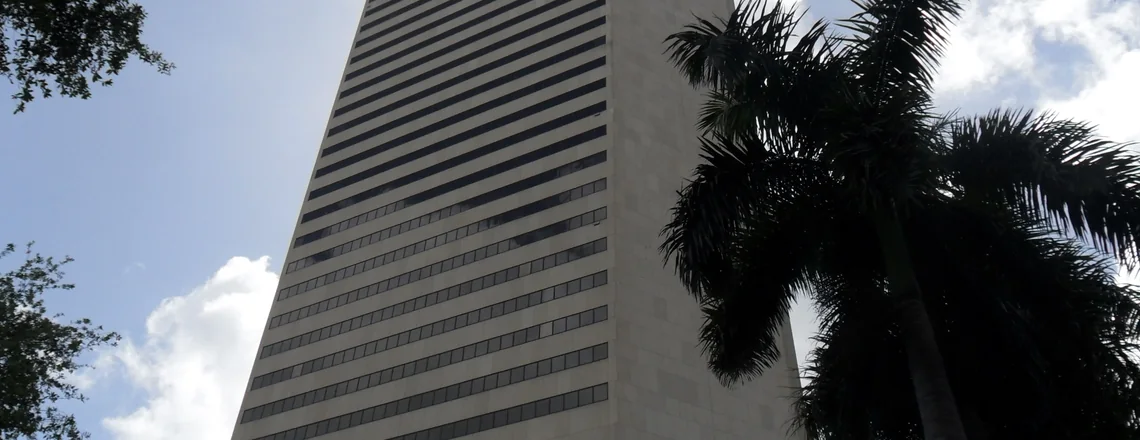
A code case almost never starts with a fine. It starts with an inspector writing up the carport somebody enclosed in 2004, or the grass that got away from you while the house sat empty, and a letter that lands with a date on it. Nothing about it feels urgent. Then the date passes, a penalty starts running for every day the violation is still there, and the number you finally hear about has a comma in it. Florida law sets that machine up and Miami-Dade runs it its own way, with its own forms, fees and desks. Here is the whole thing in order, and what each part of it does to a sale.
Key highlights
- The county only handles unincorporated Miami-Dade. If the house sits inside Miami, Hialeah, Homestead or any other city, your file is at that city hall, not at the county.
- Florida caps the daily fine, not the total. Up to $250 a day for a first violation, $500 a day for a repeat, and up to $5,000 where the violation is irreparable.
- A board may reduce a fine. That is one sentence in the statute, and the factors it weighs are the gravity of the violation, what you did about it, and your history.
- Recorded, the lien attaches to the land and to anything else you own, and it can sit there for 20 years.
- Homestead stops a foreclosure, not the lien. It stays on title, and it gets paid out of the proceeds when you sell.
The short answer
Yes, you can sell a Miami-Dade house with code violations on it, open or recorded, and you do not have to clear anything before you sign a contract. The lien is a payoff line at closing, the same as a mortgage or delinquent taxes. Two things are worth doing today rather than next month. First, order the county’s violations research so you know the real number, because it takes 10 to 20 business days to come back and a contract will not wait politely for it. Second, if the violation is something you can actually fix, fix it and then ask for the fine to be reduced, in that order. The statute lets a board cut a fine, and the thing it looks at hardest is what you did to correct the problem.

See your number. Then decide.
You get a written cash offer within 12 hours of our call, with the comps behind it. No obligation, no pressure.
- No fees or commissions
- Sold as-is
- You pick the date
Who actually has your file
This is the first question to settle, because people spend weeks calling the wrong building. Miami-Dade County enforces its own code in the unincorporated parts of the county. The Lien Section of the county’s Department of Regulatory and Economic Resources says so plainly: its violations research covers unincorporated county properties, and it searches five categories, which are unsafe structures, work without permit, expired permit, minimum housing and neighborhood violations, plus recorded liens from the county’s environmental enforcement.
If your address is inside a city, that city runs its own code department, its own hearings and its own lien payoffs. The City of Miami, for one, handles unsafe structures itself and will invoice a lien payoff within five business days of your request, with the case staying open until the charges are paid in full. Same county, different desk, different clock. Your folio number and the property appraiser’s record tell you which one you are dealing with.
The clock, step by step
The frame for every code board in the state is Chapter 162 of the Florida Statutes, and it moves in a fixed order.
The inspector writes it up and gives you time. Section 162.06(2) says the code inspector shall notify the violator and give him or her a reasonable time to correct the violation. If the violation continues past the time stated, the inspector notifies the enforcement board and asks for a hearing. Two shortcuts exist. For a repeat violation the inspector is not required to give you any time to correct it before the case goes to the board, and for something that is a serious threat to public health, safety and welfare, or that is irreparable in nature, the inspector may go straight to a hearing.
How the notice reaches you, and why that matters. Section 162.12 allows certified mail to the address the tax collector or the property appraiser has for you, hand delivery, or leaving the notice at your usual residence with somebody over 15 who is told what it says. If the certified mail is not signed as received within 30 days after the postmark, the government may post instead: once at the property and once at the main county government center or the courthouse door, at least 10 days before the hearing. Then comes the sentence that ends most arguments. Subsection (3) says proof of the attempt together with proof of posting or publication is sufficient without regard to whether or not the alleged violator actually received such notice. An old mailing address on the appraiser’s record is not a defence, it is just a reason you found out late.
Miami-Dade’s own route. The county’s code enforcement implementing order runs the paperwork side. Where no timely appeal has been filed and the violation has not been corrected, the Clerk’s Code Enforcement Division issues a notice setting out the civil penalty, the accrued penalty and the total due within 30 days, and it warns that if payment is not received or the violation is not corrected inside those 30 days, a lien will be placed. If you do take it to a hearing and the hearing officer finds you guilty, the order adds hearing costs of $75 per violation adjudicated guilty, payable to the Clerk, plus the enforcement costs of the department that issued the notice.
Appealing is narrow. Section 162.11 gives an aggrieved party 30 days from the execution of the order to appeal to the circuit court, and it is blunt about what that appeal is: not a hearing de novo, but limited to appellate review of the record created before the enforcement board. Whatever you did not say at the hearing, you do not get to say later.
What the fines run to
Section 162.09 sets the ceilings. A fine shall not exceed $250 per day for a first violation and $500 per day for a repeat violation, and where the board finds the violation to be irreparable or irreversible it may impose a fine not to exceed $5,000 per violation. Subsection (3) keeps the meter running: the fine shall continue to accrue until the violator comes into compliance or until judgment is rendered in a suit filed under the section, whichever comes first. Nobody has to send you a monthly statement while that happens.
The sentence worth knowing by heart. Section 162.09(2)(c) reads, in full, that an enforcement board may reduce a fine imposed pursuant to this section. Paragraph (2)(b) says what it weighs when it sets the number in the first place: the gravity of the violation, any actions taken by the violator to correct the violation, and any previous violations committed by the violator. So the sequence that works is fix it, get the inspector back out to sign off on compliance, gather the invoices and the photographs, then ask for mitigation. Asking first, with nothing done, hands the board nothing to reduce.
Work without a permit, and the permit nobody closed

Of the five categories the Lien Section searches, two are about paper rather than condition. Work without permit is the obvious one: the enclosed carport, the bathroom added in the back, the new roof a neighbour’s cousin put on for cash. Expired permit is the quiet one, and it catches honest owners. Somebody pulled the permit, the work got done, and nobody ever called for the final inspection, so the county’s system still shows the job open years later.
Neither one stops a sale, but both show up the moment a buyer’s title company runs a municipal lien search, which in South Florida is routine rather than optional. The practical choice is whether to close the permit out before you list or to price it in and let the buyer deal with it. Closing it out means an inspection of work that may be twenty years old, built to a code that has been replaced twice since, which is exactly where the cost stops being predictable. We go through that calculation for the whole country in selling a house with unpermitted work.
Unsafe structures, the expensive end

Unsafe structures is the category that turns a code file into a five figure problem. A fire-damaged shell, a roof that has opened up, a vacant house somebody has been getting into: once the building official calls a structure unsafe, the question stops being whether you will spend money and becomes whether you spend it on repairs or on a demolition bill. Section 162.09(3) allows a certified copy of an order imposing a fine, or a fine plus repair costs, to be recorded, so the work the local government ends up doing rides along with the penalty.
If the structure is in the City of Miami rather than unincorporated county, the city says it will outline the repair and permitting timeline for you and that a one-time extension may be granted where the request is found to have merit. Everywhere in the county, the lever that actually helps is time. An unsafe structures case moves faster than a mowing ticket, and a sale that would have been comfortable three months ago turns into a race once a demolition order exists.
When it becomes a lien, and what the lien can do
Here is the part most owners picture wrongly. Recording is what changes a fine into a lien. Under section 162.09(3), a certified copy of an order imposing a fine may be recorded in the public records and from then on constitutes a lien against the land on which the violation exists and upon any other real or personal property owned by the violator. Two houses and a boat in your name, one code case: the lien reaches all of it.
After three months with the lien unpaid, the enforcement board may authorise the local government attorney to foreclose on it, or to sue for a money judgment. Section 162.10 gives that lien a 20 year life from recording, and a suit filed inside the 20 years keeps it alive, though it does not bind later buyers or creditors for value without notice unless a lis pendens is recorded.
Then comes the protection nobody tells homeowners about. The same subsection says no lien created under this part may be foreclosed on real property which is a homestead under section 4, Article X of the State Constitution. Miami-Dade’s implementing order follows that line exactly: for a lien that remains unsatisfied one year from the date of recordation, the department may refer it to the County Attorney, who initiates foreclosure in circuit court on non-homestead properties where foreclosure is in the county’s best interest. Rental houses, inherited houses nobody lives in, vacant lots: those are the ones that get foreclosed.
Do not read that as the lien being harmless. It still sits on your title, it still runs with the land, no title company will close around it, and your lender hears about it, because the county sends a copy of the Notice of Intent to Lien to the holder of the mortgage. That notice is also an opening: it offers a window to avoid the lien by signing a settlement agreement covering correction of the violation, the original penalty, the continuing penalties, the hearing costs, the department’s enforcement costs and the accrued interest. Payment plans exist too, on written request and proof of economic need or extenuating circumstances, though the department files the lien anyway to protect its position. When it is finally paid in full the county records a satisfaction of lien.
If you are also carrying an association balance or back taxes on the same house, the order those get paid in is worth a read: start with HOA liens in Florida and Florida back taxes, and the general picture of selling with anything recorded against you is in can you sell a house with a lien on it.
Selling a Miami-Dade house with the lien on it
The mechanics are ordinary. Get the number, put it on the settlement statement, close.
Getting the number is the slow part, so start it first. The county’s Lien Section charges $320.12 for violations research on a property and $80.03 per folio for a lien pay-off letter, which must be paid up front. It quotes 10 to 20 business days for research and releases, longer where the research is complicated, and up to three business days for a pay-off letter once payment clears. Requests go in by email or by mail to the Lien Collection Section at 11805 SW 26th Street, Suite 230, and the section’s number is 786-315-2777. A buyer’s title company will order its own municipal lien search on top of that, which is how anything you forgot about surfaces.
For what the rest of the closing costs look like next to that payoff, we broke the Florida side down line by line in what a seller pays at closing in Florida, including the Miami-Dade documentary stamp rate.
Market context matters here, because a code lien is a fixed number and your equity is not. The Miami Association of Realtors counted 824 single-family closings in Miami-Dade in September 2026, down 4.7 percent year over year, at a median price of $692,000. Of those, 216 were paid in cash, so better than one sale in four needed no lender at all. Median time from listing to contract was 41 days and from listing to closing 80 days, sellers got 95.3 percent of their original asking price, and there were 4,536 active listings, about 5.1 months of supply. On an 80 day timeline, a fine running at $250 a day is not a detail.
Your options, side by side
Four honest routes, plus the one most people take by accident:
| Your option | Best when | The trade-off |
|---|---|---|
| Correct it, then ask for mitigation | The violation is something you can physically fix and afford | You pay for the work and still owe whatever the board leaves standing, but this is the only route that reliably shrinks the fine |
| Sign a settlement agreement | A Notice of Intent to Lien has arrived and you can clear the balance in one go | It covers the penalty, continuing penalties, hearing and enforcement costs and interest, and you have to perform on it or the lien lands anyway |
| Request a hearing or appeal | The inspector has the wrong property, the wrong owner, or the work was in fact permitted | You have 30 days to the circuit court and it is a review of the record only, so everything has to be said at the first hearing |
| Pay it off and list on the market | The house is otherwise sound and you can carry the payoff plus repairs until closing | Median time from listing to closing in the county is 80 days, and a daily fine keeps running the whole time unless compliance is signed off |
| Sell as-is and clear it at closing | The fix costs more than you have, or the house needs work you were never going to fund | The price reflects the condition and the payoff, but the lien comes out of the proceeds, the balance is yours and you pick the date |
How a fast as-is cash sale works here
Boring on purpose. You describe the house honestly, including the case number if you have one and roughly what the county says you owe, and you get a written cash offer, usually inside about 24 hours. If you take it, a Florida title company runs the file: the municipal lien search, the payoff letters from the county or the city, the mortgage payoff, prorated taxes, and an instruction to pay all of it at closing out of the proceeds. No lender means no appraisal and no underwriter deciding in week five that an open permit is a problem.
Closing lands on the date you choose, as soon as roughly two to three weeks when title is clean, later if you need more time. The one deadline to respect is the county’s own queue: research runs 10 to 20 business days, so that request goes in the day a contract is signed, not the week of closing. You take what you want and leave the rest, cleanout included. If the phrase itself is new to you, what selling as-is actually means is the plain English version.
How Sterling Home Offer helps
We buy single-family houses for cash across South Florida, and a code file is part of the ordinary workload rather than a reason to walk away. The promise is short enough to hold us to. A no-obligation cash offer in about 24 hours, built on the condition of the actual house and real nearby sales. Strictly as-is: no repairs, no cleanout, old roofs, unpermitted additions, overgrown yards and a folder of county letters, disclosed honestly and priced honestly. No agent commission and no fees, so the offer is the number you work from. And your date is the date. The wider local picture is in our Miami cash buyer page covers the county, and the national guide to code violations covers how other states handle the same problem.
The bottom line
A Miami-Dade code case is slower and more procedural than the letters make it feel, and almost every exit is cheaper early. The fine has a daily cap but no ceiling, the board can cut it once you have actually fixed something, the lien reaches every property in your name but cannot force the sale of the house you live in, and the county needs two to four weeks just to tell you what you owe. The expensive move is the one that feels safest, which is waiting to see whether the next letter is worse than the last one. It is.
Sources
- Florida Statute 162.09, Administrative fines, costs of repair, liens: up to $250 per day for a first violation and $500 per day for a repeat violation, up to $5,000 where the violation is irreparable or irreversible, the factors the board weighs, the one sentence allowing a board to reduce a fine, a certified copy of the order recorded as a lien against the land and any other real or personal property of the violator, foreclosure possible after 3 months, and no foreclosure against a constitutional homestead (The Florida Senate)
- Florida Statute 162.06, Enforcement procedure: the inspector notifies the violator and gives a reasonable time to correct, a hearing follows if the violation continues past that time, no correction period is required for a repeat violation, and a serious threat to public health, safety and welfare or an irreparable violation may go straight to the board (The Florida Senate)
- Florida Statute 162.12, Notices: certified mail to the address on the tax collector or property appraiser record, hand delivery, or service at the usual residence on a person over 15, posting where certified mail is not signed as received within 30 days of the postmark, posting at the property and at the courthouse or main county government center at least 10 days before the hearing, and proof of attempt plus posting being sufficient without regard to whether the violator actually received the notice (The Florida Senate)
- Florida Statute 162.10, Duration of lien: no lien continues for longer than 20 years after the certified copy of the order imposing a fine is recorded unless an action is commenced in that time, and a filed action does not bind creditors or later purchasers for value without notice unless a lis pendens is recorded (The Florida Senate)
- Florida Statute 162.11, Appeals: an aggrieved party may appeal a final administrative order to the circuit court within 30 days of the execution of the order, and the appeal is not a hearing de novo but is limited to appellate review of the record created before the enforcement board (The Florida Senate)
- Miami-Dade County Department of Regulatory and Economic Resources, Lien Section: violations research on unincorporated county properties covering unsafe structures, work without permit, expired permit, minimum housing and neighborhood violations at $320.12 per property, a lien pay-off letter at $80.03 per folio paid up front, 10 to 20 business days for research and releases, up to three business days for a pay-off letter after payment, and the Lien Collection Section address and phone number (Miami-Dade County)
- Miami-Dade County Implementing Order 2-5, Code Enforcement: hearing costs of $75 per violation adjudicated guilty payable to the Clerk, the Clerk’s notice of the total due within 30 days and the warning that a lien follows if payment or correction does not happen inside 30 days, the Notice of Intent to Lien with its settlement agreement option and a copy to the mortgage holder, payment plans on proof of economic need, referral to the County Attorney for foreclosure on non-homestead property after a lien sits unsatisfied for one year, and the satisfaction of lien recorded on full payment (Miami-Dade County)
- Monthly Market Summary, September 2026, Single-Family Homes, Miami-Dade County: 824 closed sales (down 4.7 percent), 216 paid in cash, median sale price $692,000, median 41 days to contract and 80 days to sale, 95.3 percent of original list price received, 4,536 active listings and 5.1 months of supply (Miami Association of Realtors)
- City of Miami, Respond to an Unsafe Structure Violation: the city sets the repair and permitting timeline, a one-time extension may be granted where the request has merit, a lien payoff invoice is issued within five business days of the request, and the case cannot close until the lien charges are paid in full (City of Miami)
Miami-Dade code violation FAQs
Can I sell a house in Miami-Dade that has an open code violation?
Yes. An open violation or a recorded code lien is a payoff item, not a wall. The buyer’s title company orders a municipal lien search, the county or the city issues a payoff figure, and the amount comes out of your proceeds at closing the same way a mortgage payoff does. What you cannot do is ignore it and hope the search misses it. In Miami-Dade the search is a published county service with a fee and a queue, so it gets found. The only thing that changes while you wait is the size of the number.
Can Miami-Dade take my house over a code fine?
Not while you live there. Section 162.09(3) of the Florida Statutes says no lien created under this part may be foreclosed on real property which is a homestead under section 4, Article X of the State Constitution. The county’s own code enforcement implementing order follows that line: once a lien has sat unsatisfied for a year, the department may send it to the County Attorney to foreclose in circuit court on non-homestead properties. That protection is about forced sale, not about your title. The lien stays recorded, it runs with the land, and the first title search on your sale will find it.
How much can a Miami-Dade code fine actually grow?
Under section 162.09(2)(a) a fine may run up to $250 per day for a first violation and up to $500 per day for a repeat violation, and where the violation is irreparable or irreversible the board may impose a fine of up to $5,000. Subsection (3) says the fine keeps accruing until the violator comes into compliance or until judgment is rendered, whichever comes first. The county can also add the cost of work it had to do and its enforcement costs, because the statute lets a certified copy of an order imposing a fine, or a fine plus repair costs, be recorded as a lien.
How do I find out exactly what I owe the county?
Ask the Lien Section of Miami-Dade’s Department of Regulatory and Economic Resources. Violations research on a property costs $320.12 and covers unsafe structures, work without permit, expired permit, minimum housing and neighborhood violations along with recorded liens. A lien pay-off letter costs $80.03 per folio and has to be paid up front. The county quotes 10 to 20 business days for research and releases and up to three business days for a pay-off letter once it is paid. If your address sits inside a city rather than unincorporated Miami-Dade, the city has its own desk. The City of Miami, for example, invoices an unsafe structures payoff within five business days of the request.
The notice went to an old address and I never saw it. Does that help me?
Less than it should. Section 162.12 lets the local government serve you by certified mail at the address the tax collector or property appraiser has, by hand delivery, or by leaving the notice at your usual residence with someone over 15. If the certified mail is not signed for within 30 days of the postmark, the government may post instead, at the property and at the courthouse or main county government center, at least 10 days before the hearing. Subsection (3) then says proof of the attempt plus proof of posting or publication is sufficient without regard to whether or not the alleged violator actually received such notice. Keep the property appraiser’s mailing address current. It is the cheapest insurance there is.
Can the fine be reduced once I fix the problem?
Often, and this is the step people skip. Section 162.09(2)(c) is one sentence long: an enforcement board may reduce a fine imposed pursuant to this section. Paragraph (2)(b) tells you what the board weighs, which is the gravity of the violation, any actions taken by the violator to correct it, and any previous violations. So the order matters. Fix the thing first, get the inspector back out to confirm compliance, collect your receipts and photographs, and then ask for mitigation. Asking before the work is done gives the board nothing to work with.
Does the buyer inherit my code lien?
A recorded code lien attaches to the land under section 162.09(3), so it travels with the property unless it is paid and satisfied. That is exactly why no title company will close without clearing it, and why cash buyers who work in Miami-Dade price it in rather than walk away. On our side the payoff is ordered during the title work and paid out of the proceeds at closing, and the county records a satisfaction of lien afterwards. You do not have to clear it before you sign a contract.
Related guides
This article is general information, not legal, tax or financial advice. Florida statutes, county ordinances and local practice all change, and every property is different. Read the notice you were actually served, ask the issuing department for the ledger behind any balance, and confirm your situation with a licensed Florida attorney before making decisions about your home.
One step left
Get your number. Then decide.
Two minutes now. Your number in writing within 12 hours of our call.
P.S. You don't have to decide anything today. Get your number, compare it with what an agent would get you, then decide. Moving help is limited each month.Nothing to decide today. Get your number, compare it with an agent's, then decide. Moving help is limited each month.