
Home › Blog › Florida Seller Closing Costs
Florida closing costsWhat a Seller Pays at Closing in Florida: Doc Stamps, Title, and County Differences

Ask what closing costs run for a seller in Florida and somebody will hand you a percentage. The percentage is close to useless, because the three numbers that decide your total are not percentages of each other. One is a tax rate written into a statute. One is a premium the state sets by rule. And the question of who pays that premium is not state law at all: it is a box in the contract, and which box gets checked depends on the county your house is in. Here is the whole list, line by line, with the statute or the contract clause behind each one.
Key highlights
- Documentary stamps on the deed are the one fixed line. 70 cents per $100 of the price everywhere except Miami-Dade, where the rate is 60 cents and the extra 45 cent surtax does not apply to a single-family house.
- Who buys the owner’s title policy is a check-one box, not a rule. The standard contract carries a separate provision for Miami-Dade and Broward where the buyer pays the premium.
- The association’s estoppel fee is capped at $250, with up to $150 more if you are behind and $100 more for three day delivery. If it arrives late, it is free.
- Property taxes are prorated to the day and Florida bills in arrears, so the year’s bill is split at the table rather than paid in advance.
- Sell from abroad and the buyer withholds 15 percent of the amount realized under FIRPTA, which is 15 percent of the price, not of your profit.
The short answer
Five lines make up almost all of a Florida seller’s costs: the documentary stamp tax on the deed, the owner’s title policy if you are the one buying it, the payoffs that come off the top (mortgage, association balance, recorded liens), property taxes prorated to the closing date, and the commission if you listed with an agent. Everything else on the statement is small enough to round. Two of those five are fixed by the state. Two of them are yours to negotiate before you sign anything. One of them, the payoffs, is simply what you already owe, and it would be owed whether you sold or not.

See your number. Then decide.
You get a written cash offer within 12 hours, with the comps behind it. No obligation, no pressure.
- No fees or commissions
- Sold as-is
- You pick the date
Documentary stamps on the deed
This is the line nobody budgets for, and it is the one you cannot talk your way out of. Under section 201.02(1)(a) of the Florida Statutes, a deed that transfers an interest in real property is taxed at 70 cents on each $100 of the consideration, or any part of $100. The words “or portion thereof” do real work: a price of $415,050 is charged as 4,151 units of $100, not 4,150.5.
Miami-Dade runs on its own numbers. The Florida Department of Revenue puts the Miami-Dade rate at 60 cents on each $100, with a county surtax of another 45 cents on each $100. The sentence that matters for anyone selling an ordinary house there: the surtax “is not due on a document that transfers only a single-family dwelling.” So a house in Hialeah or Kendall is taxed at 60 cents, below the statewide rate, while the same price on a different kind of property would carry $1.05.
Put the state median against it. Florida’s median single-family sale price in September 2026 was $415,000, according to the Florida REALTORS monthly summary. That is 4,150 hundreds, so the stamps come to $2,905 in Orlando, Tampa, Jacksonville or Fort Myers, and $2,490 on a single-family house in Miami-Dade. It is paid once, at the table, out of your proceeds.
One thing sellers mix up: the stamps on the deed are the seller’s under the standard contract, but the stamps and intangible tax on the buyer’s note and mortgage are the buyer’s, and so is the fee to record the deed itself. Your side of the recording window is narrower than you would guess, and we come back to it below.
The owner’s title policy, and why your county decides
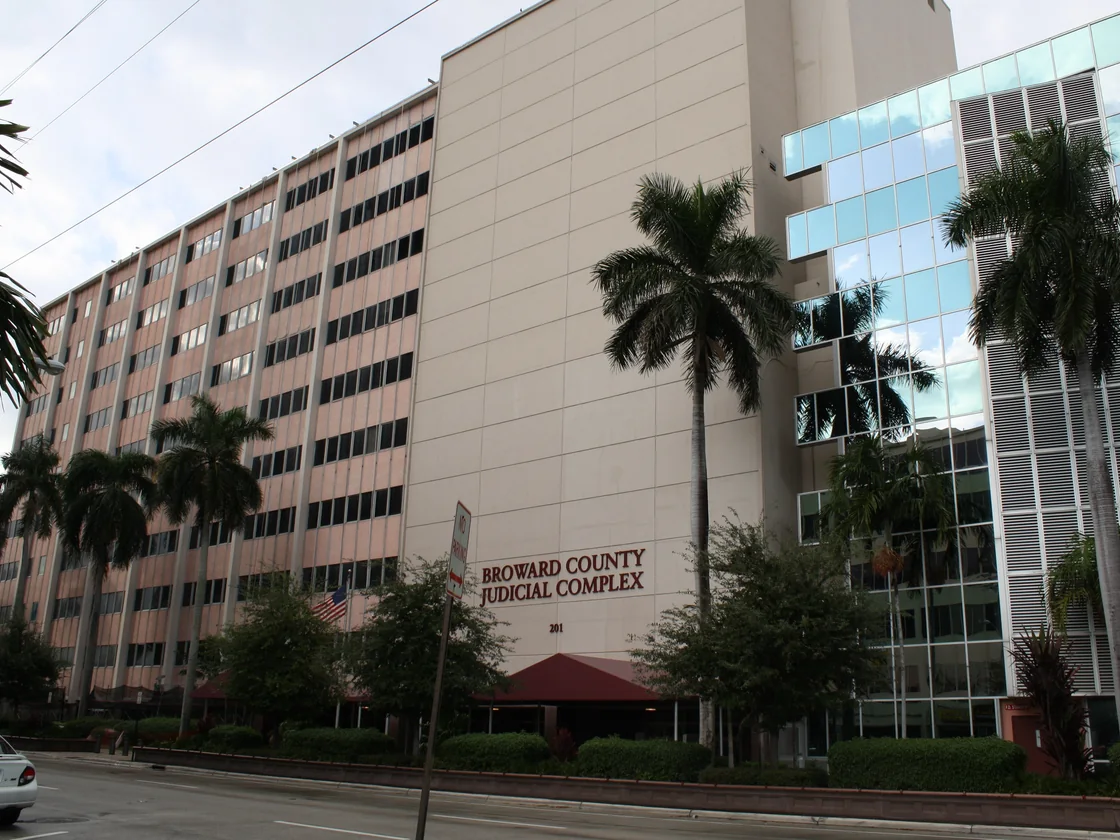
Florida does not let title companies compete on price. Under section 627.782, the Financial Services Commission must adopt a rule specifying the premium to be charged in this state by title insurers, and it has to revisit that premium at least once every three years. The practical effect is that shopping five title companies for a better premium is wasted effort. The premium is the premium. What you can change is who pays it, and how much of the surrounding work lands on your side.
That part lives in paragraph 9 of the “AS IS” Residential Contract for Sale and Purchase published by Florida Realtors and The Florida Bar, the form most Florida houses are sold on. Paragraph 9(c) says CHECK ONE, and there are three choices:
- 9(c)(i). The seller designates the closing agent and pays for the owner’s policy and charges. The buyer pays for any lender’s policy and endorsements.
- 9(c)(ii). The buyer designates the closing agent and pays for the owner’s policy, the lender’s policy and the endorsements.
- 9(c)(iii), the Miami-Dade and Broward regional provision. The buyer designates the closing agent and pays the premiums. The seller pays the actual cost of three things only: a title search or continuation acceptable to the buyer’s underwriter, capped at $200 if the blank is left empty, a tax search, and a municipal lien search.
So the same $415,000 house produces a very different seller’s statement in Fort Lauderdale than in Lakeland, and the difference is not a law, a tradition anybody has to honour, or something your closing agent decides. It is whichever line somebody ticked when the offer was written. If you are selling in Palm Beach, Hillsborough, Orange, Duval, Pinellas, Lee, Polk, Pasco, Brevard or Volusia, the usual local custom is 9(c)(i), which puts the policy on you. Read the box before you sign, because it is as negotiable as the price.
Notice also what that contract calls a municipal lien search: a search for unrecorded liens imposed under Chapters 153, 159 or 170 in favour of a governmental body. Unrecorded is the operative word. Code fines, utility balances and special assessments do not always show up in a title search, and in Florida they follow the property rather than the person.
The payoffs that come off the top
These are not really costs of selling. They are debts you already have, settled on one day instead of thirty more months, and the title company pays them out of your proceeds before the balance reaches you.
- The mortgage. Your lender issues a payoff letter good through a stated date, with interest to the day. Close later than that date and the number grows a little.
- The association. Under section 720.30851, the association must issue an estoppel certificate within 10 business days of a written request. Hand delivered or sent electronically it is good for 30 days, by regular mail 35. The fee is capped at $250 where nothing is delinquent, with no more than $150 extra if a balance is owed and $100 extra for delivery inside three business days. Miss the 10 business days and the association may not charge for it at all. The contract puts estoppel fees on the seller.
- Recorded liens and certified assessments. Paragraph 9(f) makes the seller pay liens imposed by a public body that are certified, confirmed and ratified before closing, plus the public body’s most recent estimate for an improvement that is substantially complete when the contract is signed. The buyer takes the rest.
- Curing title. Paragraph 9(a) also hands the seller “recording and other fees needed to cure title.” An old satisfaction nobody recorded, a corrective deed, a death certificate that has to go into the official records: small amounts, but yours.
None of these stop a sale. They are lines on a statement, the same as the mortgage. We walk through the lien side of it in selling a house with an HOA lien in Florida, and the tax side in behind on Florida property taxes.
Property taxes, prorated to the day
Florida bills property taxes in arrears, which trips up sellers who moved here from somewhere that bills ahead. The bill lands on November 1 for the year that is nearly over, and it runs delinquent on April 1. So at a closing in, say, August, nobody has yet paid for the year you are in. The title company prorates it: you credit the buyer for the days you owned the house, the buyer pays the whole bill when it arrives, and the arithmetic comes out even.
The discount schedule is worth knowing if your closing is near the end of the year. Under section 197.162, paying before delinquency earns 4 percent off in November, 3 percent in December, 2 percent in January, 1 percent in February and nothing in March. On a $4,000 tax bill that is $160 in November and zero in March, for the same money owed.
If an older bill is already delinquent, it does not block the closing either. It gets paid from the proceeds like any other lien, with the county’s charges attached.
The lines that only hit some sellers
- Commission. If you listed the house, what you pay is whatever your listing agreement says, and that figure is negotiable before you sign it, not after. In a direct sale there is no commission at all, which is usually the largest single difference between the two routes.
- FIRPTA. If you are a foreign person for tax purposes, the buyer is required to withhold and send in 15 percent of the amount realized. That is 15 percent of the sale price, not of your gain, and it is the buyer who is on the hook if it is not withheld. The contract charges FIRPTA withholding and reporting costs to the seller. Plenty of Florida sellers are surprised to learn the rule turns on tax status rather than on citizenship, so ask your accountant early.
- Your own lawyer, and closing services. The contract gives each side its own attorney’s fees, and says each party bears their own closing services fees payable to the closing agent, using the meaning given in section 627.7711(1)(a).
- Recording charges. The clerk’s own service charge under section 28.24 starts at $5 for the first page and $4 for each additional page, plus $1 for each name over four, with county add-ons on top. Most of this is the buyer’s, since recording the deed is a buyer cost. It is the smallest line on the page.
A worked example at the Florida median
Here is the whole list against the $415,000 state median, with the clause that puts each line where it lands:
| The line | Who pays it in the standard contract | What it comes to |
|---|---|---|
| Documentary stamps on the deed | Seller, paragraph 9(a) | $2,905 at 70 cents per $100. In Miami-Dade, $2,490, because a deed transferring only a single-family house is exempt from the 45 cent surtax |
| Owner’s title policy | Check-one in 9(c): seller under (i), buyer under (ii), buyer under the Miami-Dade and Broward provision (iii) | Premium set by state rule, so identical at every title company. Under the Miami-Dade and Broward provision the seller’s share drops to the title search (up to $200 unless changed), the tax search and the municipal lien search |
| HOA estoppel certificate | Seller, paragraph 9(a) | Up to $250, up to $150 more if you are behind, $100 more for three business day delivery, and nothing at all if the association misses its 10 business days |
| Property taxes | Prorated between both sides at closing | The year’s bill split by days owned, because Florida bills in arrears. Paying in November instead of March keeps 4 percent of it |
| Mortgage payoff and recorded liens | Seller, out of proceeds | Whatever the payoff letters say, with interest calculated to the closing date |
| Real estate commission | Seller, if the house was listed | Whatever your listing agreement says. Negotiable before you sign it, fixed afterwards, and absent entirely in a direct sale |
| FIRPTA withholding | Withheld by the buyer if the seller is a foreign person | 15 percent of the amount realized, which is the price rather than the profit, recovered later through a tax filing if too much was held |
What an as-is cash sale changes, and what it does not
Three of those lines disappear and the rest behave exactly the same, which is worth saying plainly because some cash buyer advertising implies otherwise.
Gone: the commission, because no agent is involved, and the repair and preparation money that never shows up on a settlement statement but comes out of the same pocket. In our own purchases we also cover the standard closing costs, so the number in the offer is the number you work from.
Not gone: documentary stamps still get paid on the deed, your mortgage is still paid off to the day, an association balance still comes out of the proceeds, delinquent taxes still get cleared, and the current year’s taxes are still prorated. A cash sale is not a way around any of that. It is a way around the lender, the appraisal, the insurance binder and the six to twelve weeks they add. Florida single-family homes took a median of 47 days to go under contract and 87 days from listing to closing in September 2026.
One practical note that saves more deals than any other on this page: if the house is in an association, ask for the estoppel certificate the day a contract is signed. The association is allowed 10 business days, and a closing set for next Friday does not change that. For the plain-English version of selling in as-is condition, start with what selling a house as-is actually means, and for the national picture on these costs, closing costs for a seller, line by line.
How Sterling Home Offer helps
We buy single-family houses for cash across Florida, and we are straightforward about the money. A no-obligation written offer in about 24 hours, built on the condition of the actual house and real nearby sales. No agent commission and no fees on our side, and we cover the standard closing costs, so you can hold the offer next to an agent’s net sheet and compare like with like. Strictly as-is: old roofs, tired kitchens, an association balance, a folder of county letters. And your date is the date. If the house came through an estate, the Florida specifics are in selling an inherited house in Florida, and the wider state picture sits on our Florida cash buyer page.
The bottom line
A Florida seller’s closing costs are less mysterious than the percentage estimates make them sound. One line is a statute: 70 cents per $100, or 60 in Miami-Dade on a single-family house. One is a state-set premium whose only real question is who pays it, answered by a box in paragraph 9(c) that has its own Miami-Dade and Broward version. The rest is money you already owed, split to the day. The sellers who get surprised at the table are almost always the ones who found out in week five which box had been checked.
Sources
- Florida Statute 201.02(1)(a), Tax on deeds and other instruments relating to real property: on each $100 of the consideration, or any portion of $100, the tax is 70 cents (The Florida Senate)
- Documentary Stamp Tax: the rate is 70 cents per $100 in every county except Miami-Dade, where the rate is 60 cents per $100 plus a 45 cent surtax, and the surtax is not due on a document that transfers only a single-family dwelling (Florida Department of Revenue)
- “AS IS” Residential Contract for Sale and Purchase, form FloridaRealtors/FloridaBar-ASIS-7x, paragraph 9: seller pays documentary stamps and surtax on the deed, estoppel fees, FIRPTA charges and fees needed to cure title; buyer pays recording fees for the deed and taxes on notes and mortgages; 9(c) is a check-one on the owner’s policy with a separate Miami-Dade and Broward regional provision; 9(f) puts certified, confirmed and ratified public body liens on the seller (Florida Realtors and The Florida Bar)
- Florida Statute 627.782, Adoption of rates: the commission must adopt a rule specifying the premium to be charged in this state by title insurers, and must review the premium as needed but at least once every 3 years (The Florida Senate)
- Florida Statute 720.30851, Estoppel certificates: issued within 10 business days, effective 30 days by hand or electronic delivery and 35 days by regular mail, no fee may be charged if delivered late, capped at $250 where nothing is delinquent, with up to $100 more for delivery within 3 business days and no more than $150 extra where an amount is delinquent (The Florida Senate)
- Florida Statute 197.162, Discounts for early payment: 4 percent in November, 3 percent in December, 2 percent in January, 1 percent in February and zero in March (The Florida Senate)
- Florida Statute 28.24, Service charges by the clerk of the circuit court: $5 for the first page and $4 for each additional page of an instrument recorded in the official records, plus $1 for each name indexed over four (The Florida Senate)
- FIRPTA Withholding: the rate of withholding on the disposition of a United States real property interest by a foreign person is generally 15 percent of the amount realized, and the transferee is the withholding agent (Internal Revenue Service)
- Monthly Market Summary, September 2026, Single-Family Homes, Florida: median sale price $415,000, median time to contract 47 days, median time to sale 87 days, 20,537 closed sales of which 5,743 were paid in cash (Florida REALTORS)
Florida closing cost FAQs
What percentage does a seller pay in closing costs in Florida?
There is no reliable percentage, and the estimates you see quoted lump together things that are not comparable. Only one line is genuinely fixed: the documentary stamp tax on the deed, at 70 cents per $100 of the price under section 201.02, or 60 cents in Miami-Dade on a single-family house. After that it depends on whether you are the one buying the owner’s title policy, whether there is a commission, whether an association is involved and what you still owe. Two sellers at the same price in two counties can end up thousands apart, and nothing about the house explains the gap.
Who pays for the owner’s title policy in Florida, the buyer or the seller?
Whoever the contract says. Paragraph 9(c) of the Florida Realtors and Florida Bar AS IS contract is a check-one: under (i) the seller designates the closing agent and pays for the owner’s policy and charges, under (ii) the buyer does both, and under (iii), the Miami-Dade and Broward regional provision, the buyer designates the closing agent and pays the premiums while the seller pays only the actual costs of a title search (capped at $200 if the blank is left empty), a tax search and a municipal lien search. Local custom usually decides which box gets ticked, but custom is not law and the box is negotiable.
How much is the documentary stamp tax on a Florida deed?
70 cents on each $100 of the consideration, or any portion of $100, under section 201.02(1)(a). At the September 2026 state median price of $415,000 that is $2,905. Miami-Dade is the exception: the Department of Revenue puts the rate there at 60 cents per $100 with a 45 cent surtax, and the surtax is not due on a document that transfers only a single-family dwelling, so the same price works out to $2,490. The seller pays the stamps on the deed under the standard contract.
Does the seller pay the recording fee for the deed?
No. Under paragraph 9(b) of the standard contract, recording fees for the deed and financing statements are a buyer cost, along with taxes and recording fees on notes and mortgages. What the seller pays under 9(a) is “recording and other fees needed to cure title,” which covers things like an old satisfaction of mortgage nobody recorded or a corrective deed. The clerk’s own service charge under section 28.24 starts at $5 for the first page and $4 for each additional page, so either way it is the smallest number on the statement.
How much can an HOA charge me for the estoppel certificate?
Section 720.30851 caps it. The base fee may not exceed $250 where nothing is delinquent, an association may charge up to $100 more if you ask for it on an expedited basis and it arrives within 3 business days, and no more than $150 extra where a delinquent amount is owed. The association has 10 business days to deliver it, and if it misses that deadline it may not charge a preparation or delivery fee at all. Order it the day a contract is signed, because 10 business days is two full weeks on a calendar.
Are property taxes paid by the buyer or the seller at closing?
Both, split by the calendar. Florida bills in arrears: the bill for the current year lands on November 1 and goes delinquent on April 1. At a closing partway through the year, the seller credits the buyer for the days the seller owned the house, and the buyer pays the full bill when it arrives. If an older bill is already delinquent it is paid from the seller’s proceeds at closing. Paying early earns a discount under section 197.162: 4 percent in November, dropping a point a month to zero in March.
I live outside the United States. What gets withheld from my sale?
If you are a foreign person for tax purposes, FIRPTA generally requires the buyer to withhold 15 percent of the amount realized on the sale and send it to the IRS. Two things surprise people. It is 15 percent of the price, not of your profit, so it can exceed the tax you actually owe, and you recover the difference by filing. And it is the buyer, as the withholding agent, who is liable if nothing is withheld, which is why closing agents raise it early. The standard contract puts the charges for FIRPTA withholding and reporting on the seller.
Related guides
This article is general information, not legal, tax or financial advice. Florida statutes, the standard contract forms, county custom and title rules all change, and every sale is different. Read your own contract, ask your closing agent for a written estimate of your side of the statement, and confirm your situation with a licensed Florida attorney or accountant before making decisions about your home.
One step left
Get your number. Then decide.
Two minutes now. Your number in writing within 12 hours. Then it's your call.
P.S. You don't have to decide anything today. Get your number, compare it with what an agent would get you, then decide. Moving help is limited each month.Nothing to decide today. Get your number, compare it with an agent's, then decide. Moving help is limited each month.