
Home › Blog › Partition Actions in Florida
Florida partition actionsPartition Action in Florida: How It Works, the Timeline, and What Happens to the House
Three names on one deed, one house in Fort Lauderdale, and no agreement. Two of you want it sold. One of you lives there and is not moving. The taxes, the insurance and the roof are coming out of somebody’s pocket every month, and the phone calls have stopped being polite. Florida has an answer for that, and it is older than anybody reading this: chapter 64 of the statutes, the partition action. It is not a fight you win by being the most upset. It is a procedure with fixed steps and fixed waiting periods, and it ends with a judge. Here is how it runs, what each stage costs, how long it really takes, and what happens to the house at the end.
Key highlights
- One co-owner is enough. Section 64.031 lets a single tenant in common sue the others. No majority, no veto.
- An inherited house follows a different path since July 2020. The Uniform Partition of Heirs Property Act puts a court appraisal and a buyout offer in front of any sale.
- The buyout clock is 45 days to elect, then at least 60 days to pay. The price is the appraised value of the whole house multiplied by the share being bought.
- A single-family house almost never gets divided. You cannot split one house on one lot, so in practice a partition of a house is a sale.
- Everybody pays, by share. Section 64.081 apportions the costs and the attorney fees in proportion to each party’s interest, not to who started it.
The short answer
If you own a share of a Florida house with people who will not agree, you have the right to force the question, and you do not need their permission to use it. What you do not get is speed. Count on several months at the very best and well over a year if anything is contested, because the statute builds in an appraisal, a 45 day election, a payment window of at least 60 days and then either a listing or an auction. Every one of those months the house still needs insurance, taxes and maintenance, and nobody wants to pay for a roof they may not own next year. The three quiet routes are faster and cheaper every single time: agree to sell together, buy each other out privately, or sell your own undivided share and let somebody else inherit the argument. A partition action is the backstop. It should not be the opening move.

See your number. Then decide.
You get a written cash offer within 12 hours of our call, with the comps behind it. No obligation, no pressure.
- No fees or commissions
- Sold as-is
- You pick the date
What a partition action actually is
It is a lawsuit that asks a judge to end co-ownership. Section 64.011 says all actions for partition are in chancery, which is the old word for equity: a judge decides it, there is no jury. Section 64.031 says the action may be brought by one or more joint tenants, tenants in common or coparceners against their cotenants. That is the part families get wrong. You do not need a majority of the shares, and you do not need the sister living in the house to agree or even to answer her phone. One owner of one fractional interest can file, and the case proceeds.
Section 64.041 sets out what the complaint has to say: a description of the land, the names of the owners and anybody else with an interest, their residences, and the share each one holds, so far as the plaintiff knows. If a name, an address or a share is unknown, the complaint has to say so, and an unknown person may be named as unknown. That provision exists for exactly the family where a cousin moved away in 1998 and nobody has an address. Then section 64.051: the court determines the rights and interests of the parties and orders partition if they are entitled to it. From that point the question is no longer whether. It is how.
Something else happens early that owners rarely expect. The case normally comes with a notice of lis pendens recorded in the county’s official records, and under section 48.23 it names the parties, gives the case number, names the court, describes the property and states the relief sought. Once it is recorded, every title search finds it, and buyers and lenders treat the house as tied up until the case ends.
Who files it, and where it goes
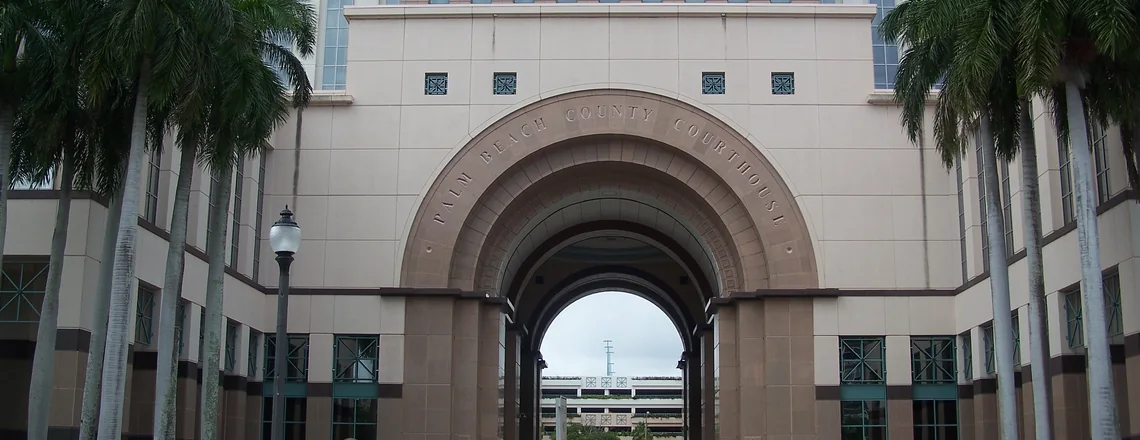
Section 64.022 puts venue in a county where all or part of the land lies, so a Broward house is a Broward case. In practice that means the Seventeenth Judicial Circuit and the circuit civil division at the Central Courthouse on Southeast 6th Street in Fort Lauderdale. The division handles non-criminal disputes over $50,000, which a house comfortably is.
The filing fee is graduated by the value of the claim. The Broward County Clerk of Courts publishes $401 for a claim of $50,000 or less, $906 where the value is more than $50,000 but less than $250,000, and $1,906 where it is $250,000 or more, plus $10 for each summons issued. Those figures track section 28.241, which sets the statutory base at $395, $900 and $1,900 for up to five defendants, with $2.50 for each defendant beyond five and an extra $4 charge. Put a number on it: the Florida REALTORS September 2026 summary for Broward County puts the county’s median single-family sale price at $641,500, so an ordinary Broward house lands squarely in the top tier. The case costs $1,906 to open before a lawyer has written a word.
If the estate is still open, start in the probate file instead. Section 733.814 lets the personal representative or any beneficiary petition the court before the estate is closed, where two or more beneficiaries are entitled to undivided interests in the same property. The court may partition it in the same manner as a civil partition action, or, if it cannot be divided without prejudice to the owners and cannot be fairly and practicably allotted among them, direct the personal representative to sell it. That is usually a shorter road than opening a separate chapter 64 case, and it is the first thing to ask the estate’s lawyer about. The background is in our guide to selling a house in probate.
Heirs property, and the 2020 law that changed the order of play
For most inherited Florida houses, the old chapter 64 is no longer the whole story. Chapter 2020-55, Laws of Florida, added Part II to chapter 64, the Uniform Partition of Heirs Property Act, and section 64.203 applies it to every partition action filed on or after July 1, 2020. The court has to decide whether the property is heirs property, and if it is, the case must be partitioned under Part II unless all of the cotenants agree otherwise in a record. Part II supplements the old rules and replaces any of them it conflicts with.
Section 64.202 defines heirs property as real property held in tenancy in common where, at the time the action is filed, three things are true: no agreement in a record binding all the cotenants governs partition, one or more of the cotenants acquired title from a relative, and at least one of three thresholds is met. Those thresholds are 20 percent or more of the interests held by cotenants who are relatives, 20 percent or more held by one individual who acquired title from a relative, or 20 percent or more of the cotenants being relatives. A relative, in the same section, is an ascendant, a descendant or a collateral, or somebody otherwise related by blood, marriage or adoption.
In family language: if the house came down through the family and the people arguing about it are related, this is almost certainly heirs property, and the protections below are yours whether or not anybody in the room has heard of them. The same framework sits under our guides to selling an inherited house in Florida and an inherited house in Miami-Dade.
The appraisal, and the 45 day buyout window
This is the heart of the 2020 law, and the part that most changes what happens to your house.
First the number. Under section 64.206 the court orders an appraisal by a disinterested real estate appraiser licensed in Florida, who values the property as if one person owned the whole fee simple estate and files a sworn appraisal with the court. There are two ways around it: if all the cotenants agree on a value or on a method of valuation, the court adopts that, and if the court finds the evidentiary value of an appraisal is outweighed by its cost, it holds an evidentiary hearing and sets the value from the evidence. Otherwise the clock runs. Within 10 days after the appraisal is filed, the court notifies every party with a known address of the appraised value and tells them the appraisal is on file at the clerk’s office. A party then has 30 days after that notice to object and state the grounds. The valuation hearing happens no sooner than 31 days after the notice went out, whether anybody objected or not, and the parties may put in other evidence of value. Only after that does the court set the fair market value and tell everybody what it is.
Then the offer. Section 64.207 says that once value is determined, if any cotenant asked for a partition by sale, the court must notify all the parties that any cotenant who did not ask for a sale may buy the interests of the ones who did. The election period is 45 days after that notice is sent. The price is not a negotiation: it is the value of the entire parcel multiplied by the selling cotenant’s fractional ownership of it. If more than one cotenant elects, the right to buy is divided among them in proportion to the shares they already hold.
Say the appraisal lands at $600,000 and three siblings own a third each. Two want out, one wants to stay. The one who stays writes $400,000 into the court registry and the house is hers. The payment deadline is set by the court and has to be at least 60 days after the notice goes out. If only some of the electing cotenants pay, the ones who did get 20 more days to take the remainder. If nobody pays, the case drops back to section 64.208 as if none of it had happened.
Divide the land, or sell the house
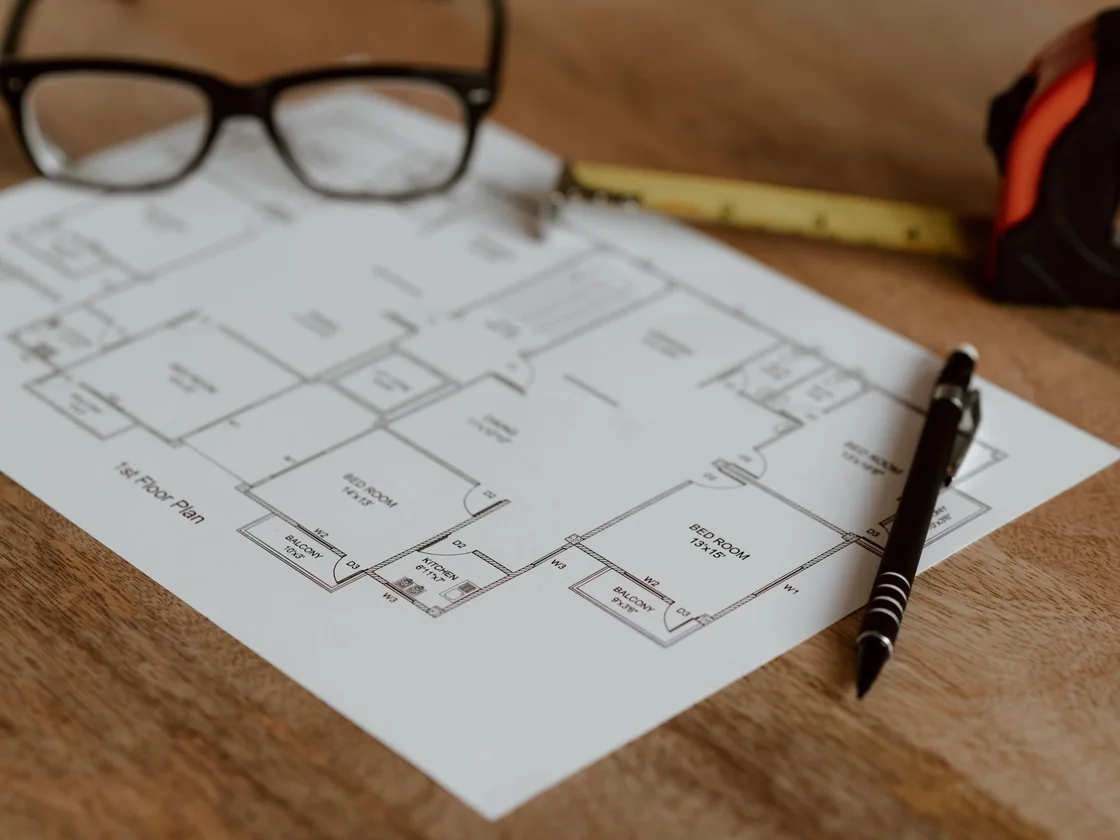
If the buyout does not take up all the interests of the owners who asked for a sale, section 64.208 says the default is partition in kind: the court divides the property into physically distinct, separately titled parcels and enters a judgment with the legal description of each new parcel and the owner of each, which the clerk records. The court may order equalizing payments between cotenants so the division is proportionate, and it has to approve requests by two or more parties to combine their interests into one parcel.
The court orders a sale instead only where it is satisfied that commissioners appointed under Section 64.061 considered the statutory factors and found that dividing the property would prejudice the cotenants as a group. Section 64.209 lists those factors: whether the property can practically be divided, whether dividing it would make the combined value of the parcels materially less than the value of the whole sold together, how long the cotenant and relatives before them have owned or lived on it, sentimental attachment including ancestral value, the lawful use a cotenant is making of it and the harm of losing that use, and how far each cotenant has paid their pro rata share of taxes, insurance and upkeep or contributed to improvements. No single factor decides it on its own.
Now the reality. Those factors were written with farmland and family land in mind, where dividing it is genuinely possible. A house on a suburban lot in Broward or Pinellas cannot be sawn in half, and three parcels of a quarter acre with one kitchen between them are worth far less than the house sold whole. So the commissioners report prejudice, the court agrees, and the partition becomes a sale. Their mechanics are quick to state: the court appoints three, they take an oath to act faithfully and impartially, they may employ a surveyor, and they report in writing without delay. Any party may object within 10 days after the report is served, and if no objection is sustained the report is confirmed.
How the sale actually happens
For heirs property the method is deliberately gentle, and it surprises people who expect courthouse steps. Section 64.210 makes an open market sale the default, with sealed bids or an auction only where the court finds that would be more economically advantageous for the cotenants as a group. The parties can agree on a broker within 10 days of the order, and if they cannot the court appoints a disinterested broker licensed in Florida and sets a reasonable commission. The broker offers the property in a commercially reasonable manner at a price no lower than the court’s determination of value. In other words, the house gets listed like any other house.
When an offer at least equal to that value arrives, section 64.211 gives the broker 7 days to report the buyer, the price, the terms including any owner financing, the amounts payable to lienholders and anything affecting the commission. If nothing qualifying turns up within a reasonable time, the court holds a hearing and may take the best outstanding offer, reset the value and give it another run, or switch to sealed bids or an auction.
Where the property is not heirs property, the older route applies. Section 64.071 has the court order a public sale to the highest bidder, conducted by the commissioners or by the clerk, with the money paid into court and divided according to each party’s interest. At least one third of the purchase money is paid down unless all parties consent otherwise, with the balance secured by a mortgage, and the court has to approve the sale and order a conveyance before one is made. If the clerk runs it, section 45.031 governs: the sale is set not less than 20 days or more than 35 days after the final judgment, notice is published for two consecutive weeks, the high bidder posts a deposit of 5 percent of the final bid, objections are due within 10 days after the clerk files the certificate of sale, and the certificate of title issues once that window closes. Section 45.035 lets the clerk collect a $70 service charge for making, recording and certifying the sale and title, and up to another $70 for conducting it electronically, which most Florida counties now do.
Here is the part worth staring at. In the Florida REALTORS September 2026 summary for Broward County, 962 traditional single-family sales closed at a median of $645,000 while the 8 foreclosure and bank-owned sales closed at a median of $444,500. Forced sales live in the bottom column. That gap is not a judgment about anybody’s family. It is what happens when a property is sold on a court’s timetable instead of a seller’s.
What it costs, and who pays
Section 64.081 is short and it catches people out. Every party is bound by the judgment to pay a share of the costs, including attorney fees for the plaintiff’s or the defendant’s counsel, in proportion to their interest and according to equitable principles, and those fees have to reflect services that benefited the partition itself rather than one side’s campaign against the other. Where the property is sold, the court may order costs and fees paid out of the proceeds, and taxes due at the time of the sale come out of the purchase money. Before any lawyer is paid, the running total already holds the filing fee, $10 for each summons, service on every cotenant, the appraiser, the commissioners and any surveyor they employ, a court set broker commission on an open market sale, and the clerk’s charges on an auction. All of it comes off the top, shared by share. Winning the argument does not mean somebody else pays for it.
The timeline, honestly
Lay the waiting periods end to end: filing and service, the heirs property finding, the appraisal, 10 days for the court to send notice of it, 30 days to object, a valuation hearing no sooner than 31 days after that notice, 45 days to elect a buyout, at least 60 days to pay, 20 more if some pay and some do not, and then either a listing for a reasonable time or a clerk sale set 20 to 35 days after judgment. With nobody actually fighting, that is roughly six months. Real cases add service on a cotenant nobody can find, an objection to the appraisal, a motion calendar in a busy circuit and a buyer whose financing falls through. A year is ordinary. Two is not rare.
Compare that with the house next door that nobody is arguing about. In the Florida REALTORS September 2026 summary for Broward County, the median Broward single-family home went under contract in 39 days and closed 77 days after it was listed, with 243 of the 974 closings paid in cash. The partition is not slow because Florida is slow. It is slow because the law is being careful with somebody’s inheritance, and care takes months.
Your options, side by side
Five honest routes, with what each one really costs you:
| Your option | Best when | The trade-off |
|---|---|---|
| Agree to sell it together | Everyone will sign, even reluctantly | You split the proceeds after the ordinary costs of a sale, and nobody pays a filing fee, an appraiser or a lawyer |
| Buy the others out privately | You want to keep the house and can raise the money | You still need a number everybody accepts, which usually means an appraisal anyway, plus a deed and a title company to do it properly |
| Sell your undivided share | You want out now and the others will not move | The buyer takes your fraction and your place in the disagreement, so the price reflects that; you are out in weeks instead of a year |
| File the partition action | Nobody will talk, or somebody is living there for free and will not discuss it | Six months at best and often much longer, costs and attorney fees apportioned by share, and an ending you no longer control |
| Let it drift | Honestly, never | Taxes, insurance and repairs keep running, one owner keeps the benefit of the house, and the longer it sits empty the less there is left to divide |
How a fast as-is cash sale works here
There are two versions of this, and they are different deals.
The first is the whole house, with every owner on board. You describe the property honestly, including who is on the deed and whether a case has been filed, and you get a written cash offer, usually inside about 24 hours. A Florida title company then does the work: pulling the chain of title through the estate, ordering payoffs for any mortgage, code lien or back taxes, and getting every cotenant to sign. There is no lender, so no appraisal contingency and no underwriter deciding in week five that the roof is too old. If liens are in the picture, the detail is in selling a house with a lien on it.
The second is your share alone. If the others will not sell and you do not want to spend a year in court, you can convey your undivided interest and be done in weeks. The price is lower than your fraction of a clean sale, because what is being bought is a share with no control and an argument attached, and anybody who tells you different is selling you something. That route has its own page: selling your share as an heir.
How Sterling Home Offer helps
We buy single-family houses for cash across Florida, and co-owned and inherited houses are an ordinary part of the week rather than a reason to walk away. The promise is short enough to hold us to. A no-obligation cash offer in about 24 hours, built on the condition of the actual house and real nearby sales. Strictly as-is: no repairs, no cleanout, old roofs, tired kitchens, a relative still living there, a yard nobody has touched in two years. No agent commission and no fees, so the offer is the number you work from, and your date is the date. We will also buy one owner’s share when the rest of the family is not ready. For a Broward house the local page is our Fort Lauderdale cash buyer page, and the statewide picture sits on our Florida page.
The bottom line
A Florida partition action works, and that is exactly why it should be your last option rather than your first. One co-owner can start it alone, and once it starts nobody controls it: not the sibling living in the house, not the one who filed. The court sets the value, the law hands the other owners 45 days to buy you out and at least 60 days to pay, and if that fails the house is listed or auctioned on a schedule nobody in the family picked. Add six months of waiting periods to a year of calendar, and subtract the costs and attorney fees that come off the top by share. Compare that with what the same house sells for when the people who own it simply agree. The gap between those two numbers is the real price of the argument.
Sources
- Florida Statute 64.031, Parties: an action for partition may be filed by one or more joint tenants, tenants in common or coparceners against their cotenants, coparceners or others interested in the lands to be divided (The Florida Senate)
- Florida Statute 64.041, Complaint: it must describe the lands, name the owners and other persons interested, give their residences and the share each holds so far as known, and say so where a name, residence or share is unknown (The Florida Senate)
- Florida Statute 64.061, Commissioners and special magistrate: the court appoints three commissioners who take an oath, may employ a surveyor and report in writing without delay, and any party may file objections within 10 days after the report is served (The Florida Senate)
- Florida Statute 64.071, Sale where property is not divisible: a public sale to the highest bidder conducted by the commissioners or the clerk, at least one third of the purchase money paid down unless all parties consent otherwise, proceeds paid into court and divided by interest, and no conveyance until the court approves the sale (The Florida Senate)
- Florida Statute 64.081, Costs, taxes and attorneys fees: every party pays a share of the costs, including attorney fees for the plaintiff’s or the defendant’s counsel, in proportion to their interest and on equitable principles, with the fees limited to services benefiting the partition, payable from the proceeds on a sale (The Florida Senate)
- Florida Statute 64.202, Definitions: heirs property is real property held in tenancy in common where no record agreement among all cotenants governs partition, one or more cotenants acquired title from a relative, and 20 percent or more of the interests or of the cotenants meet the statutory relative tests (The Florida Senate)
- Florida Statute 64.203, Applicability: Part II governs partition actions filed on or after July 1, 2020, the court must determine whether the property is heirs property, and heirs property must be partitioned under Part II unless all cotenants agree otherwise in a record (The Florida Senate)
- Florida Statute 64.206, Determination of value: a disinterested Florida licensed appraiser values the property as if one person owned the whole fee simple, the court gives notice within 10 days of the filed appraisal, objections are due within 30 days of that notice, the hearing is held no sooner than 31 days after it, and the court determines the equitable accounting on a cotenant’s request (The Florida Senate)
- Florida Statute 64.207, Cotenant buyout: cotenants who did not ask for a sale have 45 days to elect to buy the interests of those who did, at the determination of value multiplied by the fractional share, with a payment deadline at least 60 days after the notice and 20 further days to take any remaining interest (The Florida Senate)
- Florida Statute 64.208, Partition alternatives: partition in kind is the default unless commissioners weighing the statutory factors find that dividing the property would prejudice the cotenants as a group, with equalizing payments available and an undivided portion allocated to unknown or defaulted cotenants (The Florida Senate)
- Florida Statute 64.210, Open-market sale, sealed bids or auction: an open-market sale is the default, a broker agreed within 10 days or appointed by the court must be licensed in Florida and offer the property at no less than the determination of value, and the court may re-offer or switch to sealed bids or auction if no qualifying offer arrives (The Florida Senate)
- Florida Statute 45.031, Judicial sales procedure: the sale is set not less than 20 days or more than 35 days after the final judgment, notice is published for two consecutive weeks, the high bidder posts a deposit of 5 percent of the final bid, objections are due within 10 days after the certificate of sale is filed, and the certificate of title issues once that period passes (The Florida Senate)
- Florida Statute 28.241, Filing fees for trial and appellate proceedings: a circuit civil action relating to real property carries a graduated fee of $395, $900 or $1,900 by the value of the claim for up to five defendants, plus $2.50 for each additional defendant and a $4 charge (The Florida Senate)
- Florida Statute 733.814, Partition for purpose of distribution: before the estate is closed the personal representative or any beneficiary may petition, and the court may partition the property as in a civil partition action or direct the personal representative to sell it where it cannot be divided without prejudice or fairly allotted (The Florida Senate)
- Fees and Costs, Broward County Clerk of Courts: circuit civil filing fees for a new action relating to real property of $401 for a claim of $50,000 or less, $906 for more than $50,000 but less than $250,000 and $1,906 for $250,000 or more, plus $10 for the issuance of each summons (Broward County Clerk of Courts)
- Monthly Market Summary and Monthly Distressed Market, September 2026, Single-Family Homes, Broward County: 974 closed sales, a median sale price of $641,500, a median 39 days to contract and 77 days to sale, 243 cash sales, and a distressed table showing 962 traditional sales at a median of $645,000 against 8 foreclosure or bank-owned sales at $444,500 (Florida REALTORS, released October 16, 2026)
Florida partition action FAQs
Can one co-owner force the sale of a house we all inherited?
In substance yes, although the word is partition rather than sale. Section 64.031 lets one or more joint tenants, tenants in common or coparceners sue their cotenants, so a single owner of a single fractional share can file and the case moves whether or not anybody else wants it to. There is no majority vote and nobody holds a veto. What section 64.031 does not promise is a sale. Under the Uniform Partition of Heirs Property Act the court first has the property appraised, then offers the other owners the chance to buy out whoever asked for the sale, and only if that fails does the house go on the market.
How long does a partition action take in Florida?
Add up only the waiting periods the statutes require and you are already near six months. Section 64.206 gives the court 10 days to send notice of the appraisal, the parties 30 days after that notice to object, and sets the valuation hearing no sooner than 31 days after the notice went out. Section 64.207 then gives the other owners 45 days to elect a buyout and at least 60 days to pay, with another 20 days if only some of them pay. If it goes to a sale instead, add a listing period or a clerk sale set 20 to 35 days after the judgment under section 45.031. That is the clean version. A contested case with a disputed appraisal or a missing cotenant runs a good deal longer.
Can my sister buy me out instead of selling the house?
That is exactly what section 64.207 is built for. Once the court has set a value, every cotenant who did not ask for a sale gets notice that they may buy the interests of the ones who did. The price is not negotiated: it is the court determined value of the whole property multiplied by the selling cotenant’s fractional share. She has 45 days to tell the court she wants to buy and at least 60 days from that notice to pay the money into the court. If several cotenants elect, the right to buy is split among them in proportion to the shares they already hold.
My brother lives in the house and pays nothing. Does that count?
It counts, and it is written into the statute rather than left to argument. Section 64.206 says that on any cotenant’s request the court determines the equitable accounting and adjusts the price, the buyout, the judgment or the partition to match it, and section 64.202 defines that accounting as the contributions and adjustments of accounts between cotenants relating to the property. Section 64.209 then makes the lawful use a cotenant is making of the property, and the extent to which cotenants paid their pro rata share of taxes, insurance and upkeep, two of the factors behind the decision to divide or sell. Keep the receipts for the taxes, the insurance and the roof.
Does the house get auctioned off on the courthouse steps?
Usually not, if it is heirs property. Section 64.210 makes an open market sale the default and allows sealed bids or an auction only where the court finds that would be more economically advantageous for the cotenants as a group. The parties can agree on a broker within 10 days of the order, and if they cannot the court appoints a disinterested Florida licensed broker, sets the commission and requires the property to be offered at no less than the court determined value. An auction is what happens when the property is not heirs property, under section 64.071, or when the open market produces nothing.
Who pays for the lawyers and the filing fee?
Everybody, in proportion to what they own. Section 64.081 binds every party to pay a share of the costs, including attorney fees for the plaintiff’s or the defendant’s counsel, in proportion to their interest and on equitable principles, and limits those fees to services that benefited the partition rather than one side of a fight. Where the property is sold the court may order the costs and fees paid out of the proceeds, and taxes due at the time of the sale come out of the purchase money. So the money comes off the top before anybody is paid out.
Can I sell my share without suing anybody?
Yes. Your undivided interest is your property and you can convey it, which is why section 64.202 defines heirs property around interests held in tenancy in common in the first place. You sign a deed for your fractional share, the buyer steps into your place as a cotenant, and the people still on the deed keep whatever rights they had. The honest part is the price: a fractional share with no control over the house and no agreement among the owners is worth less than the same fraction of a clean sale, and any buyer who tells you otherwise is not being straight with you.
Related guides
This article is general information, not legal, tax or financial advice. Florida statutes, local court practice and every family’s paperwork are different, and chapter 64 cases turn on facts. Read the deed, pull the probate file, and confirm your own situation with a licensed Florida attorney before making decisions about your home.
One step left
Get your number. Then decide.
Two minutes now. Your number in writing within 12 hours of our call.
P.S. You don't have to decide anything today. Get your number, compare it with what an agent would get you, then decide. Moving help is limited each month.Nothing to decide today. Get your number, compare it with an agent's, then decide. Moving help is limited each month.
Before you goOne quick step
See your number before you decide.
Send me the address. Within 12 hours of our call you get a written cash offer and the recent sales nearby we based it on. Then it's your call.AndyFounder
- 4.9 on Google
- No fees, no repairs
- You pick the closing date
Prefer to talk? Call or text (888) 260-1777