
 Skip to content
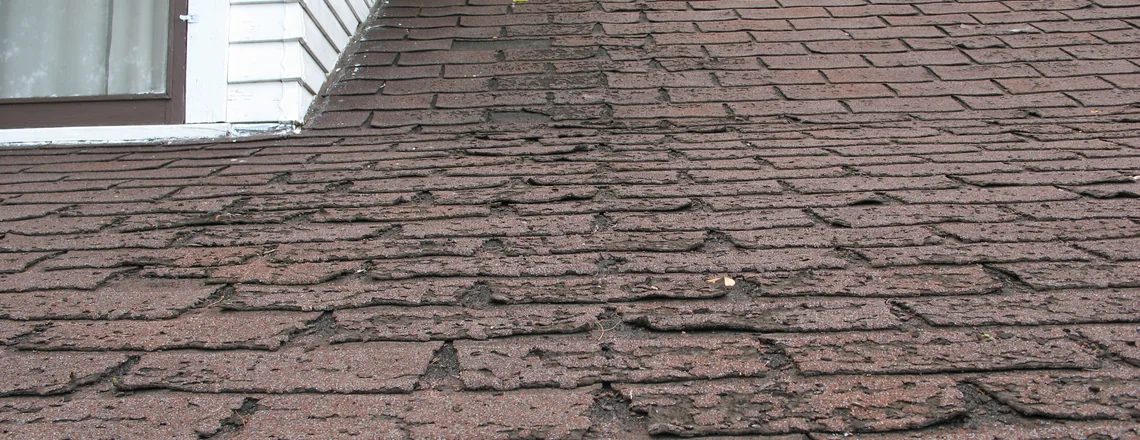
You already know the roof is done. Maybe a storm finished it, maybe it just got old and the granules are sitting in the gutters, maybe your insurance company put it in a letter before you noticed it yourself. Now you want to sell, and the question in your head is whether you have to put a new roof on a house you are leaving. You do not. But the roof quietly decides who is allowed to buy your house and on what terms, and that is the part worth understanding before you hand anybody a deposit. This guide covers what a lender’s appraiser is required to do, why the insurance side usually sets the real deadline, what actually drives a roofing bid, and the two honest ways to be finished with it.
Yes, you can sell a house that needs a new roof, and houses do it every week. No law requires you to replace it first. What changes is the size of the buyer pool. Roughly speaking you have three routes. Replace the roof, then list, and reach every buyer including the financed ones. List it as it is and accept that some lenders will balk, which usually means waiting for a buyer with cash or a renovation loan. Or sell as-is to a cash buyer who prices the roof in and closes on your date. Which one is right depends less on the house than on two numbers only you know: how much cash you can put into a place you are leaving, and how many more months you can comfortably pay for it.
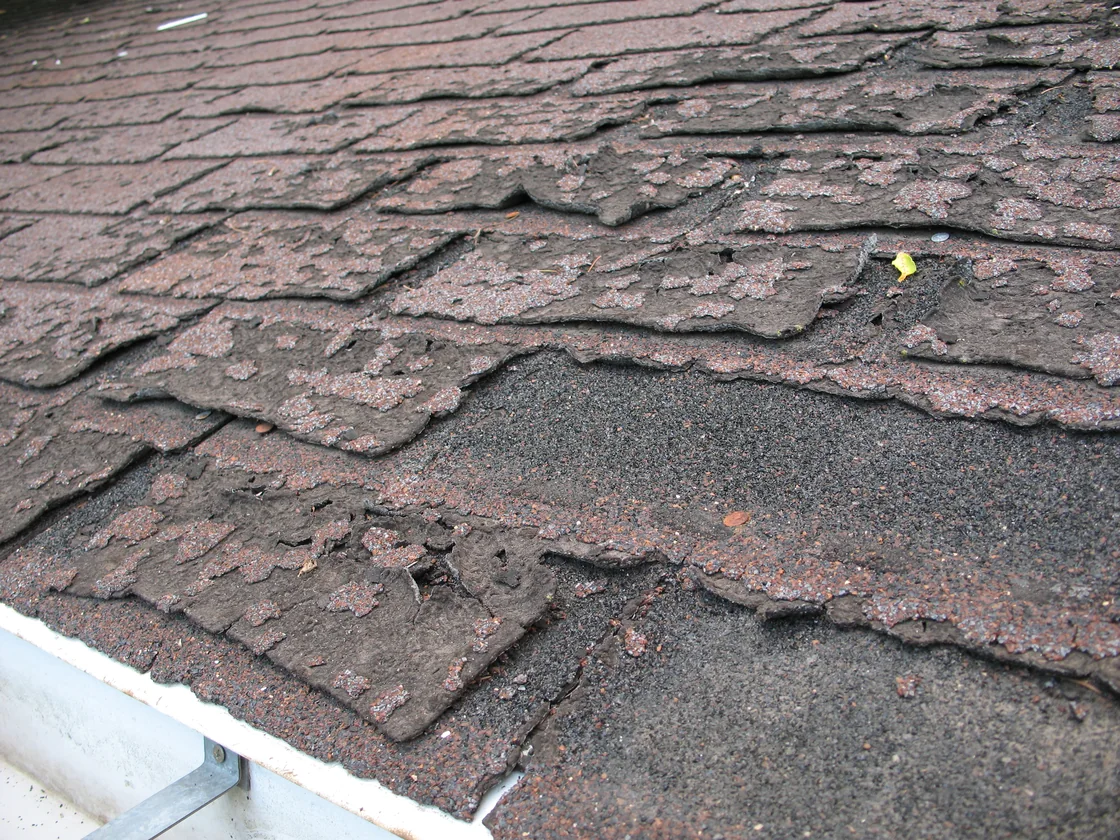
Worn through to the mat at the eaves. This is the condition an appraiser means by less than two years of remaining physical life. Photo: Dale Mahalko, CC BY-SA 3.0, via Wikimedia Commons (cropped).
This is the part sellers find out too late, usually three weeks into a contract. An appraiser is not just guessing at a number. On a government backed loan the appraiser is working from a written rulebook, and the roof has its own paragraph in it.
For FHA loans, HUD Handbook 4000.1 tells the appraiser to notify the lender of a deficiency if the roof covering “does not prevent entrance of moisture or provide reasonable future utility, durability and economy of maintenance and does not have a remaining physical life of at least two years”. It goes further and says the appraiser “must report if the roof has less than two years of remaining life, and make the appraisal subject to inspection by a professional roofer”. That last phrase is the one that costs money. Subject to means the lender will not fund until somebody qualified has been up there and the condition is cleared.
Conventional loans work differently but land in a similar place. Fannie Mae grades the property on a condition scale in its Selling Guide. A C5 house has “obvious deferred maintenance” and needs “some significant repairs”, and is still eligible in as-is condition. A C6 house has damage or deferred maintenance “severe enough to affect the safety, soundness, or structural integrity of the improvements”, and the guide is blunt about it: loans on C6 properties “are not eligible for sale to Fannie Mae”. Anything hitting safety, soundness or structural integrity has to be repaired to reach at least a C5 first.
Read those two together and you get the real rule, which is more forgiving than most sellers fear. A tired roof does not stop a sale. A leaking roof, or one that has let water into the structure, does. Worn shingles with a couple of years left are a price conversation. Water in the decking is a condition the lender will not fund around.
And then the awkward question: who pays? Formally, whoever the contract says. Practically, it is almost always the seller, because the buyer cannot close without the repair and cannot usually pay for it either, having just put every dollar into the down payment. One genuine alternative exists and is worth raising with your agent. HUD’s 203(k) program lets a borrower “purchase and rehabilitate a Structure” inside one mortgage, with a Standard 203(k) covering remodeling and repairs above a $5,000 minimum and a Limited 203(k) for smaller non-structural work. A buyer using one can finance the roof instead of asking you to replace it.
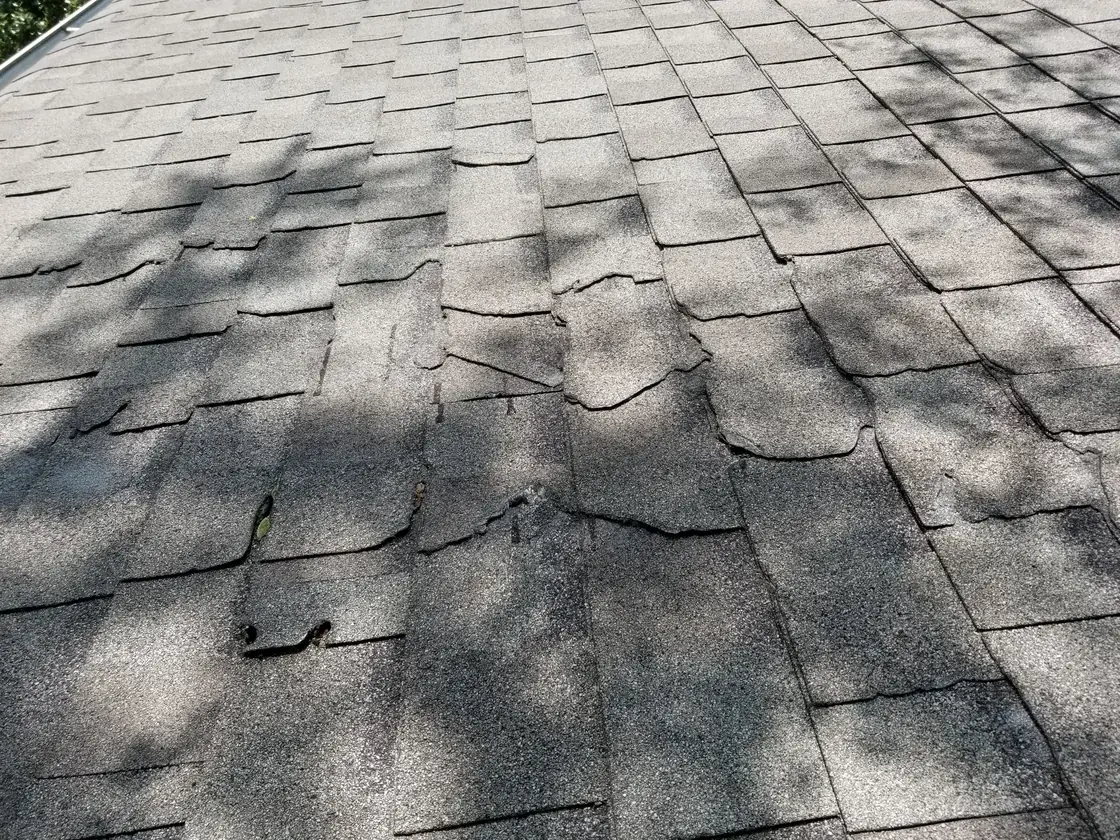
Tabs lifted and torn after wind. This is the damage a carrier looks for, and the reason a roof claim and a roof deductible usually arrive together. Photo: Samuel Bolton, CC BY-SA 4.0, via Wikimedia Commons (cropped).
Here is the thing most sellers underestimate. A lender will not close a loan on a house that cannot be insured, so if local carriers have started declining roofs like yours, your buyer pool shrinks whether or not the appraiser says a word. In a lot of markets the insurance letter arrives long before anyone talks about selling, and it is the thing that starts the conversation.
Florida is the state that put numbers on this, which makes it a useful yardstick even if you live elsewhere. Florida Statutes section 627.7011(5) says an insurer “may not refuse to issue or refuse to renew a homeowner’s policy insuring a residential structure with a roof that is less than 15 years old solely because of the age of the roof”. For a roof at least 15 years old, the insurer must let you pay for an inspection by an authorized inspector before it can require replacement as a condition of coverage, and it may not refuse on roof age alone “if an inspection of the roof of the residential structure performed by an authorized inspector indicates that the roof has 5 years or more of useful life remaining”. That subsection applies to policies issued or renewed on or after July 1, 2022.
The same statute defines how the clock is counted, which catches people out. Roof age runs from “the last date on which 100 percent of the roof’s surface area was built or replaced” under the code in effect at the time. Patching one slope in 2019 did not restart anything.
Money comes into it from a second direction. Florida Statutes section 627.701(10) lets a carrier apply a separate roof deductible, capped at “the lesser of 2 percent of the Coverage A limit of the policy or 50 percent of the cost to replace the roof”, and only on a claim adjusted on a replacement cost basis. If that is on your policy, a roof claim may hand you a much larger share of the bill than your regular deductible suggests. Most states have no statute like either of these, which means carriers there are free to make roof age an underwriting question with no floor at all.
The practical move, in any state: get a roof certification or inspection from a licensed roofer before you list, not after a buyer’s inspector raises it. If a roofer will put remaining life in writing, that document does more work for you than any amount of arguing. If your carrier has already dropped you, our guide on selling when you cannot afford the insurance covers where that usually goes.
The deadline nobody sends you a notice about: in Florida, 15 years is the line where a carrier can start asking about your roof, and the protection past it depends on an inspection you pay for showing 5 years or more of life left.
Nobody calls you on the anniversary. Ask your agent what your carrier does at renewal, in writing, before the renewal lands.
Roofing quotes vary wildly for the same house, and it is rarely because one roofer is cheating. It is because they priced different work. Before you compare numbers, make sure every bid spells out the same things:
There is a code trap in some states too. In Florida, Florida Statutes section 553.844(5) says that where a roof “was built, repaired, or replaced in compliance with the requirements of the 2007 Florida Building Code, or any subsequent editions” and 25 percent or more of it is being worked on, only the repaired portion must meet the current code. Read it the other way round and the point is clear: on an older roof that never met that standard, a large repair can pull you into a full replacement you did not budget for. Ask the roofer which side of that line your house sits on before you authorize a patch.
As for whether the money comes back, be realistic. A new roof mostly removes an objection rather than adding its own cost to your price, because buyers treat a sound roof as the baseline condition of a house, not a feature. That is not a reason to skip it. It is a reason to stop thinking of it as an investment and start thinking of it as the cost of reaching financed buyers. We work through that arithmetic properly in how much you actually lose selling as-is.
Say what you know. Disclosure rules differ by state, but roofs show up on the forms explicitly, because everybody knows this is where the arguments start. The Texas seller’s disclosure notice set out in Texas Property Code section 5.008 puts the roof in its very first block, asking for “Roof Type” and “Age” as an approximate figure, then asks whether the seller is aware of any listed item “that are not in working condition, that have known defects”.
That is a low bar and an easy one to clear honestly. Write down the age if you know it, say so plainly if you do not, and describe any leak you have had and what was done about it. A buyer who learns about a stain on the bedroom ceiling from you will negotiate. A buyer who finds it themselves after you said nothing starts thinking about lawyers. And if a previous roof went on without a permit, read selling a house with unpermitted work, because that is a separate thread that surfaces at the title company.
For a seller with a roof at the end of its life, the realistic menu is short: