
 Skip to content
The letter shows up in the mailbox. Sometimes it is a postcard, sometimes a handwritten envelope, sometimes a sign stapled to a utility pole at the end of your street. The words are always close to the same four: we buy houses. What almost nobody tells you is that those four words cover three completely different businesses, with three different sets of incentives, and the one you are talking to decides whether your sale is boring and quick or a slow motion disappointment. This guide is the plain version: who these companies are, where the offer number comes from, what the contract actually commits you to, and the two or three questions that sort the serious buyers from the rest in about a minute.
A “we buy houses” company buys a house that would be hard to sell the normal way, at a price that leaves room for the work and the risk, and closes without a lender in the room. That is the whole model, and there is nothing shady about it. The problems start when the company on the sign is not actually the company with the money, or when the number you shook hands on is not the number that reaches the closing table. You do not need to become an expert to protect yourself. You need to know which of the three businesses you are dealing with, and you need to read two paragraphs of the contract before you sign it. The rest of this guide explains both.
Everything downstream depends on this, so it is worth getting straight before anything else.
This is a company or an individual investor that signs a contract, funds the purchase, takes title, and then fixes and resells or rents the house. It carries the risk and it controls the closing date, which is exactly why it can promise one. It is also the only one of the three that can honestly tell you the deal is done when you sign.
A wholesaler signs a contract with you, then sells that contract to an actual buyer for a fee, usually before closing. You may never learn the fee, and in many deals you never meet the person who ends up owning your house. Wholesaling is not automatically a scam and a good wholesaler does real work finding houses. The catch for you is simple: a wholesaler cannot guarantee a closing date because it does not control the money. If nobody on its buyer list takes the deal at the price it needs, the contract quietly dies and you are back at the start, several weeks older.
These are the venture-backed and franchise names that advertise instant offers. They are real buyers with real money, but their pricing is a model rather than a person, and their marketing has drawn regulator attention. In August 2022 the Federal Trade Commission said one of the biggest had been tricking sellers “into thinking that they could make more money selling their home” to it than on the open market, when in fact “the vast majority of consumers who sold to Opendoor actually lost thousands of dollars” compared with a traditional sale. The order was finalized that October at 62 million dollars, and it bars deceptive or unsubstantiated claims about what a seller will take home. We compare that model with a local cash purchase in detail here: cash offer versus an iBuyer.
Every cash offer is the same subtraction: what the house is worth repaired, minus the repairs, minus the months, minus the margin.
Sellers often expect a cash offer to be a discount off an online estimate. It is not. It is built from the other end, and once you see the order it stops feeling arbitrary.
The buyer starts with what the house will be worth after it is repaired, based on what comparable finished houses near you have actually sold for. From that it subtracts the repair budget, which on an older house is usually larger than the owner thinks, because it includes the things a buyer discovers rather than the things a seller lists. Then it subtracts the carrying cost of the months the work takes: taxes, insurance, utilities, and money that is not earning anything while it sits in your drywall. Then the cost of selling it again at the far end, which for most investors means an agent and closing costs. Whatever is left over, minus the margin that makes it worth doing at all, is your offer.
That is why the gap between a cash offer and a listing price is mostly roof, plumbing and time rather than greed. It is also why a buyer who gives you a confident number before seeing the house is telling you something about itself. We break the percentages down separately in what percentage cash home buyers actually pay.
Context helps here. Nationally the median existing-home price was 417,500 dollars in September 2026, the median home took 33 days on the market before going under contract, and all-cash sales were 27 percent of transactions, down from 30 percent a year earlier. Those 33 days are the clock starting, not stopping: they end at a signed contract, not at a closing, and a financed buyer’s loan, appraisal and insurance still come after.
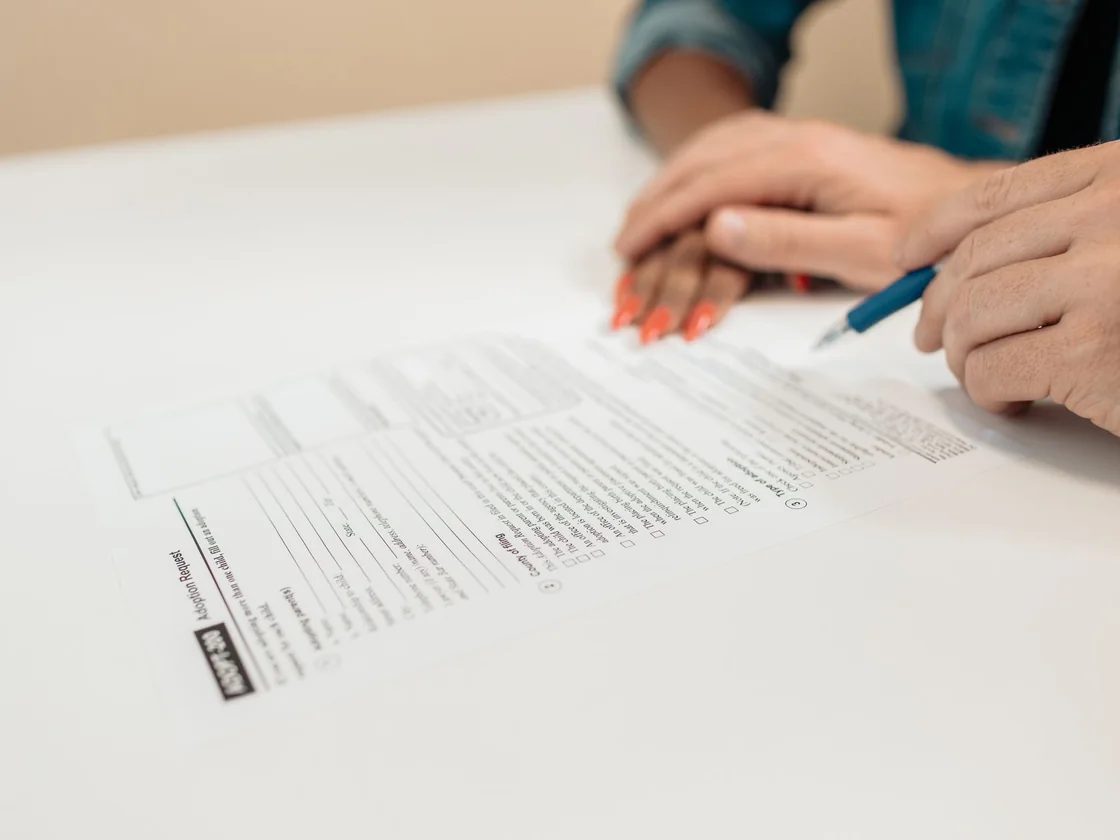
The price is on page one. The three paragraphs that decide whether you actually close are further in.
Most sellers read the price and skim the rest. Three paragraphs are worth more than the price, and they are usually short.
The assignment clause. Look for language saying the buyer may assign the contract, or for the words “and/or assigns” next to the buyer’s name. That is what lets the company you met transfer your deal to a stranger. It is not automatically bad, but it tells you which of the three businesses you are in, and you are entitled to ask for it to be struck.
The inspection or due diligence window. This is the period in which the buyer can walk away, or come back with a lower number, often for almost any reason. Ask how many days it is and what happens to the deposit when it ends. A short window with a firm price afterwards is worth real money compared with a bigger number that is free to shrink.
The earnest money. How much is it, when is it deposited, who holds it, and when does it stop being refundable? A buyer putting up meaningful money with a title company, early, is a buyer who intends to close. A buyer putting up a token amount has bought itself a free option on your house.
The single most useful question you can ask: “Will you be the party on the deed at closing, or do you intend to assign this contract?”
Anyone who deals straight will answer it in one sentence. The answer changes nothing about whether you should sell, but it changes everything about what a promised closing date is worth.
For years the assignment business lived in a grey area. Several states have now written rules, and they are a useful map of what regulators thought was going wrong.
You do not need to police any of this yourself. The practical use is narrow and real: if the person in your kitchen cannot tell you plainly whether they are buying or assigning, and whether they hold a license in your state, that is the answer.
For a seller weighing a letter in the mailbox against the normal route, the honest menu looks like this: