
 Skip to content
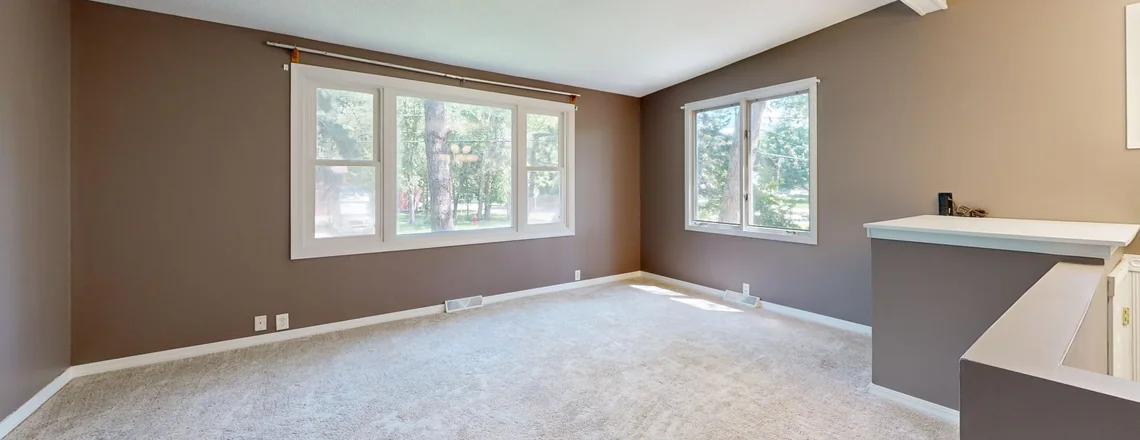
The house is empty. Maybe your mother passed and nobody has moved in. Maybe the tenant left and you never filled it again. Maybe you took a job two states away and the old place never sold, so you locked it and told yourself you’d deal with it later. However it got there, an empty house is not a neutral thing sitting quietly in the background. It costs money every month, and it quietly changes how your insurer, your county and sometimes your city treat you. This guide covers what “vacant” actually means on paper, the clock that is probably already running in your policy, what holding it really costs, and the two honest ways out.
Yes, you can sell a vacant house, and it is often the easiest kind of house to close on. Nobody has to be worked around for showings. Nobody has to find a new place before the closing date. The real question is which route you take. Route one: clean it out, fix what a lender’s appraiser will flag, list it, and keep paying to hold an empty building while a financed buyer works through their loan. Route two: sell it as-is to a cash buyer who does not mind that it is empty, does not need a policy bound the week you accept, and closes on a date you choose. What usually decides it is not the condition of the house. It is how many more months you can afford to feed it, and whether your insurer is still fully behind you. Our vacant house page is the short version of that decision; this is the long one.
In everyday speech, vacant and empty mean the same thing. In an insurance policy they do not, and the difference can decide whether a claim gets paid. Policy language typically uses both words together, “vacant or unoccupied”, and a house can trip the second one while you still think of it as full. Your late father’s house with all the furniture still in it is not stripped bare, but nobody sleeps there. The rental between tenants still has a stove and a fridge in it, and nobody sleeps there either.
Here is the part people miss. Nobody comes out to start the clock. The days run from the facts, not from a letter you received, and the first time most owners learn how their carrier counts them is after a loss, when an adjuster asks when the house was last lived in. If your house is sitting empty right now, the single most useful thing you can do this week is email your agent and ask two questions in writing: how does my policy define vacant and unoccupied, and what would it cost to add coverage that holds while the house is empty. Get the answer in writing, because that is the document that matters later.

Ask in writing how your policy counts vacant and unoccupied days. The answer is the document that matters after a loss.
Several states write the wording of a standard fire policy directly into law, and insurers writing there have to match it. The text is blunt. New York Insurance Law section 3404 sets out a standard fire policy under which, unless something else is added in writing, the company is not liable for loss occurring “while a described building, whether intended for occupancy by owner or tenant, is vacant or unoccupied beyond a period of sixty consecutive days”.
Minnesota uses almost the same sentence. Minnesota Statutes section 65A.01, subdivision 3 says the company is not liable for loss occurring while the described premises “are vacant or unoccupied beyond a period of 60 consecutive days”. Two states, two legislatures, the same number. That is not a coincidence, it is the shape the whole industry works from, and ordinary homeowners forms carry vacancy clauses built on the same idea even where no statute forces the wording.
What that means in practice is simple and unpleasant. Past that window, a fire, a burst pipe or a break-in at your empty house may land entirely on you. The fix is not complicated, it just has to be done on purpose: tell your carrier the house is empty and buy a vacant or unoccupied endorsement, or move to a policy written for vacant property. It costs more than what you are paying now. It costs a great deal less than an uncovered loss.
The deadline nobody sends you a notice about: 60 consecutive days vacant or unoccupied is the line in the standard fire policy language in New York and Minnesota, and vacancy clauses of some kind sit in ordinary homeowners policies too.
Nobody rings the bell on day 61. Call your agent before the house gets there, not after something happens in it.
The vacancy clause is not a trick. It exists because empty houses genuinely go wrong more often, and the federal numbers are not subtle. The U.S. Fire Administration’s topical report on vacant residential building fires, using national reporting data from 2013 to 2015, estimated 23,800 of them a year, causing an estimated 75 deaths, 200 injuries and $785 million in property loss annually. Vacant buildings made up 6 percent of all residential building fires. The leading cause was not wiring or a heater. It was intentional acts, at 34 percent.
The report also explains why these fires are worse than average: there is nobody inside to smell smoke or hear an alarm, so they burn longer before anyone calls them in. Of the vacant residential fires in that period, 53 percent spread to involve the entire building, and another 10 percent reached beyond it to neighboring properties. That last number is why your neighbors notice an empty house down the street, and why city inspectors do too.
None of this is an argument for panic. It is an argument for not drifting. A house that is empty on purpose, insured for being empty, checked on by somebody local, is a manageable situation. A house that is empty by accident, on a policy written for an owner who lives there, is a bet you did not know you placed.

The flag left up and a box nobody empties. It is how a street, and a thief, work out that a house is empty.
An empty house has no income and a full set of expenses. The mortgage, if there is one, runs as normal. The property taxes run as normal. Insurance runs, and once it is written properly for a vacant building it runs higher. Then there is the quiet list: somebody has to cut the grass, somebody has to collect the mail so it stops announcing the house is empty, somebody has to keep enough heat on in winter that the pipes do not split, and somebody has to drive past now and then and look at it.
The tax side has a trap in it worth knowing. If the house was your homestead and you have moved out, the exemption does not stay behind with the building. Florida’s is a clear example because the rules are written plainly. The Florida Department of Revenue says the exemption applies where the owner uses the property as “his or her permanent residence or the permanent residence of his or her dependent”, and it can take as much as $50,000 off the taxable value. Stop living there and that condition stops being true.
Leaving it in place anyway is where it gets expensive. Under Florida Statutes section 196.161, when someone received a homestead exemption they were not entitled to, the property appraiser serves a notice of intent to record a lien on any property that person owns in the county, the owner gets 30 days to pay, and the unpaid taxes can be recovered for up to 10 years back with a penalty of 50 percent of the unpaid taxes for each year and interest of 15 percent a year. Your state will have its own version of this with its own numbers. The rule of thumb travels: when a house stops being where you live, tell the property appraiser or assessor yourself, in the year it happens.
Add the pieces up over a year of “we’ll decide in the spring” and the number usually surprises people. That is the real comparison to hold in your head when a cash offer comes in below what a perfect listing might fetch after repairs: not offer against dream price, but offer against dream price minus the repairs, minus the commission, minus every month of holding it in the meantime. We walk through that arithmetic in how much you actually lose selling as-is.
This one catches out-of-state owners constantly, because it is separate from code enforcement and nobody mentions it when you leave town. A number of cities run a vacant property registry: once a building is vacant you are required to register it, give the city a local contact, and pay a fee every year it stays that way.
Cleveland is a working example. The city’s vacant property registry, set by Ordinance 3106 in February 2024, charges $70 a year per unit for a dwelling of one to three units. The city also dropped its mandatory pre-sale exterior inspection for vacant one to three unit homes on February 6, 2026, but registration, routine inspections and enforcement of the registry all continue. Cross the city line into Cleveland Heights and the rules change again: owners have 60 days after a building becomes vacant to register, the fee is $200, and it repeats every year the building stays empty.
Two neighboring cities, two different deadlines and two different numbers. That is the whole lesson. There is no national rule here, so look up your own city by name before you assume you owe nothing, and remember that unpaid municipal charges have a habit of turning into liens that show up at closing. If the mail from the city has already started, read selling a house with code violations next, because the fines and the sale interact.
For an owner with an empty house and a decision to make, the realistic menu is short: