
 Skip to content
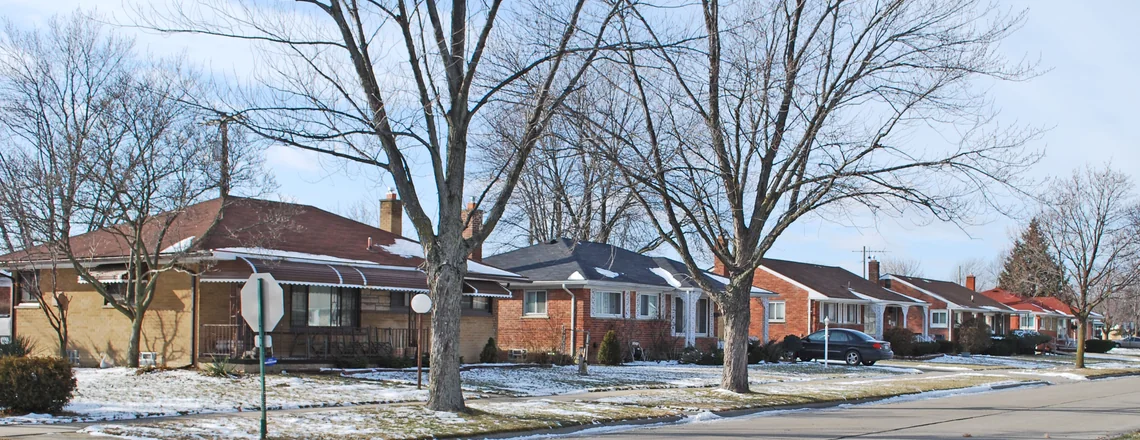
When a Detroit sale drags, the house is usually not the problem. The file attached to it is. A blight ticket nobody answered, a water balance from a tenant who left in 2022, taxes that went delinquent two Marches ago, a deed that was never cleaned up after a parent died. Detroit also has a price situation that no other large American city has in quite the same shape, and it quietly decides who is even allowed to buy your house. This guide covers what the market is actually doing, why so much of it closes in cash, what the city and the county can pull out of your proceeds at closing, what the Land Bank has to do with the number a buyer offers you, and how a fast as-is sale works in Wayne County.
You can still sell a Detroit house fast, and there are only two honest routes. Route one: put it in condition a lender and an appraiser will accept, price it for what your block is actually doing, and then wait out a financed buyer’s loan, which is where most of the calendar goes. Route two: sell it as-is to a cash buyer, where the offer comes in about a day, the title company clears the taxes and the liens out of the proceeds, and closing lands in roughly two to three weeks. Everything else, listing high “just to see”, waiting for one more spring, relisting after a financed deal collapses in week six, is the slow path in a fast costume. The rest of this guide is about picking between the two with the real numbers in front of you.
Start with the honest regional picture. In September 2026, the median listing price across the Detroit, Warren and Dearborn metro area was $274,950, and the median time a listing spent on the market was 43 days, up from 38 in May. Those are Realtor.com figures published through the St. Louis Fed, and they cover the whole metro, suburbs included.
That metro number is not your number if your house is inside the city. Detroit Future City’s review of Wayne County Register of Deeds records found 26,286 recorded home sales in Detroit across 2020 and 2021, with a median sale price of $30,000, up from $15,000 in the 2012 to 2013 period. Of the sales above $500, 58 percent closed under $40,000, and only 3,157 of them, about 12 percent, closed above $100,000. The same study found the balance had improved: ordinary market sales outnumbered distressed sales 58 percent to 42 percent, where in 2012 and 2013 only 18 percent of sales qualified as market sales at all.
Read those two paragraphs together and you have the whole Detroit timing problem. The metro moves at a normal American pace. The city moves in a price band where normal American mortgage lending barely operates.
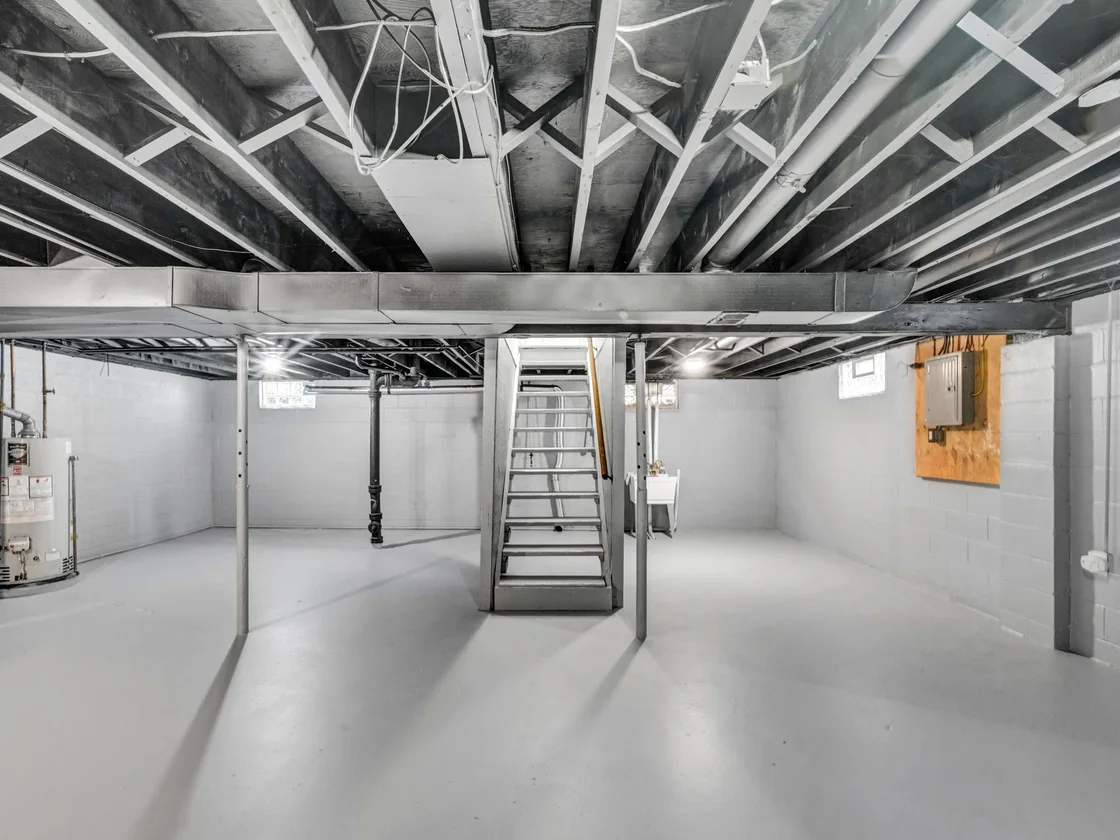
The basement settles more Detroit deals than the kitchen does: furnace, water heater, panel, and whether the plumbing is still in the walls.
Two things push a Detroit house out of the financed market, and they usually arrive together.
The loan is too small to be worth writing. A lender’s cost of originating a mortgage barely changes between a $40,000 loan and a $240,000 one, so the small end of the market is thinly served. When most of the comparable sales on your street closed under $40,000, an appraisal pulled from those sales caps what any lender will lend against your house, even if your house is in better shape than the comps.
The condition fails before the price does. Government backed loans in particular want a house that is safe, sound and habitable on the day of closing: working heat, working plumbing, a roof with life in it, no missing systems. Detroit’s housing stock is largely pre war and post war, and a house that sat vacant through a winter often has a dead furnace, a split pipe, or copper that someone took. We walk basements for a living, and the basement is where most of these deals are decided before anybody looks at the kitchen.
The practical effect is simple. The moment a house needs real work in a low price band, the buyer pool stops being everyone on Zillow and becomes people who can close without a lender’s permission. That is not a sales pitch, it is arithmetic, and it is why a realistic cash number is often close to what a listed house nets after months of waiting. We walked through the condition side of this in detail here: selling a house as-is in Detroit.
This is the Detroit specific trap that surprises out of state owners and heirs most often. A blight violation notice is a civil citation written by a city inspector or police officer for things like an overgrown lot, debris, a failing porch, or an open and unsecured structure. The fine is set by the city code and printed on the ticket, and the City of Detroit says the maximum that can be imposed is $10,000, with a $30 administrative fee on each notice, made up of a $20 city fee and a $10 State Justice assessment. Pay before the hearing date and the fine drops by 10 percent. Pay after it and it goes up by 10 percent.
What matters for a sale is what happens when nobody answers. If you miss the hearing, a hearing officer enters a decision and order of default, and the city usually asks for the maximum fine where a range applies. The city states plainly that a default order can be used to place a lien on your property, garnish your wages, or affect your credit, and that unpaid fines lead to collection actions.
A lien is not a reason to call off a sale. It is a number on the settlement statement. Title companies pay recorded liens out of the seller’s proceeds every day of the week.
The problem is only the surprise. Find out what the city shows against the address before you sign anything, so the figure arrives on page one instead of page four. The same logic applies to code fines anywhere: selling a house with code violations.
Michigan runs a tight three year schedule, and Wayne County runs it by the calendar. Taxes not paid to the local treasurer by the last day of February become delinquent on March 1. After a year of delinquency the property reaches forfeited status on the following March 1, and it may be foreclosed the year after that on March 31.
Forfeiture is not the loss of the house, but it is expensive. At that point interest rises from 1 percent to 1.5 percent per month, retroactive to the date the taxes first went delinquent, and the county adds a $175 foreclosure fee plus $30 in recording fees. The treasurer sends four notices in the first year and six more after forfeiture, so nobody arrives at the end of this by surprise, only by avoidance.
The date that actually matters is that final March 31. Until then the back taxes are simply a payoff figure that comes out of a sale, the same as a mortgage balance. After the judgment, the title belongs to the county treasurer and there is nothing left for you to sell. If this is your situation, read the detailed version before you do anything else: behind on property taxes in Detroit.
The Detroit Land Bank Authority holds and sells blighted and vacant property to get it back into use, and it is the largest single seller of houses in the city. Two of its programs set the floor your buyer is comparing you against. In the Auction, houses run online every day from 9 AM to 5 PM, bids start at $1,000, and the properties are sold as is. In Own It Now, an offer starts a 72 hour countdown and the highest offer at the end wins, also as is, with less debris cleanout than the auction houses get.
Here is the part most sellers never hear about, and it is the reason your house is worth more than an auction shell. A Land Bank buyer takes on a compliance file. Within 15 days of closing they have to upload photos of all four sides showing the property secured and the yard maintained. Within 45 days, first progress photos and a filed property transfer affidavit. Within 60 days, proof of a Detroit Water and Sewerage account. Progress photos every 30 days after that, until the house has a good exterior with no boards on the openings, a working furnace, water heater, kitchen and bathroom, active utilities, and a city inspection signed off. If the work stalls, the Land Bank keeps the right to take the property back.
So when an investor tells you your house is worth what a Land Bank auction house goes for, that comparison is missing the obligations, the holding time, and the risk of reconveyance. A clean, privately owned house that can close in two weeks with no compliance clock is a different product.

A month of holding a Detroit house you do not live in: taxes, water, insurance, and heat through a Michigan winter.
“We will wait for spring” is a plan with a monthly invoice, and in Detroit the invoice has an extra line most cities do not have. You are paying property taxes that keep running toward that March date. You are paying the water account, because an unpaid water balance on a Detroit property is its own headache at closing. You are paying insurance, which costs more and covers less on a vacant house, and some carriers will not write a vacant policy at all. And you are paying to heat an empty house through a Michigan winter, because the alternative is a frozen pipe that turns a tired house into a wrecked one in a single cold snap.
Then there is the risk that is hard to price. A vacant Detroit house with the heat off and nobody watching it is a target for scrappers, and a stripped furnace or missing copper does more damage to your sale price than six months of market movement is likely to give back. If the house is already sitting empty, this is the companion read: selling a vacant house.
None of this is complicated, but each piece has caught somebody out.
The seller disclosure statement. Michigan’s Seller Disclosure Act requires a written statement for residential property of one to four units. The form in the statute describes itself as “a disclosure of the condition and information concerning the property, known by the seller”, says it is “not a warranty of any kind by the seller”, and adds that unless otherwise advised, the seller does not possess any expertise in construction or engineering. In plain words: you are telling the buyer what you know, not guaranteeing the house. Selling as-is changes who pays for the repairs, not what you have to disclose.
Transfer tax. Michigan charges a state real estate transfer tax of $3.75 per $500 of value and the county charges $0.55 per $500, so $4.30 per $500, or $8.60 per $1,000. On a $60,000 sale that is about $516, and in a normal Michigan deal it comes off the seller’s side at closing. It is small, but it belongs in your math rather than in a surprise.
The property transfer affidavit. Michigan requires the new owner to file one with the local assessor so the transfer is on record even when the deed situation is unusual. Your title company handles it in a normal sale, but if you are doing anything informal, that form is the difference between a transfer that is recorded and one that merely happened.
The deed itself. Detroit has a lot of quitclaim history, which is exactly why title work takes a few days and sometimes a few weeks. If a house passed between relatives without probate, or a land contract was never completed, the title search will find it. Finding it early is a good outcome, not a bad one.
For a Detroit seller who cares about speed and certainty, the realistic menu is short: