
Inherited a House in Cleveland? How to Sell It Without the Headache
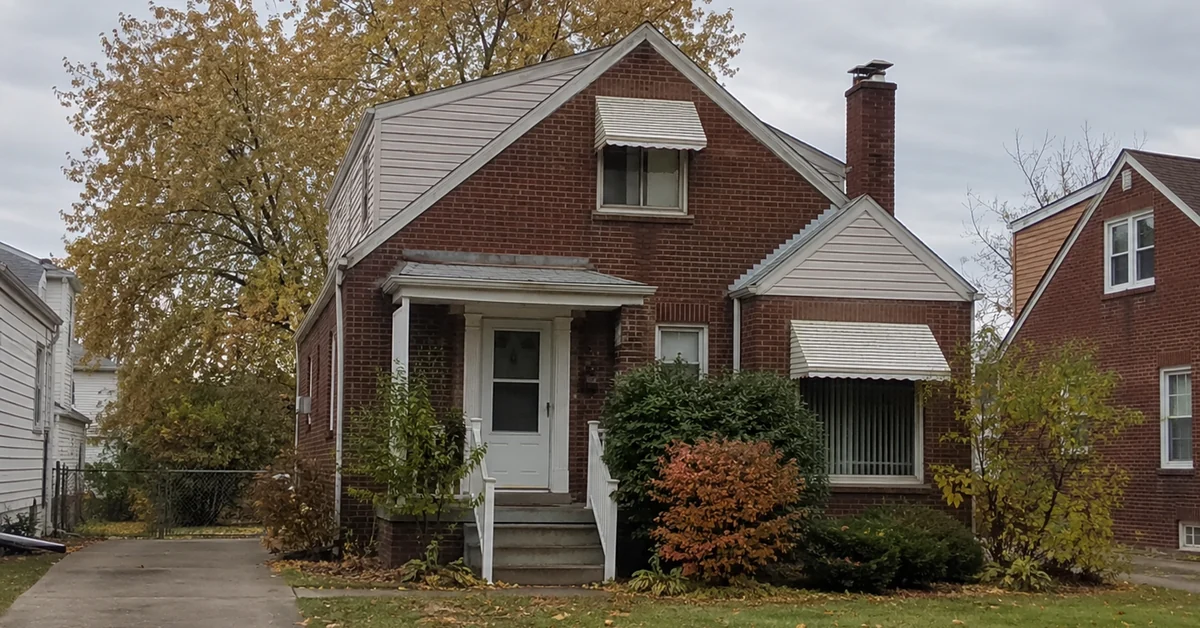
Inheriting a house sounds like a gift, and sometimes it is. But when the home is a seventy-year-old colonial on the east side, packed with a lifetime of belongings, with a furnace on its last winter and two siblings who each want something different, that gift starts to feel like a second job. On top of the grief, you are suddenly responsible for property taxes, utilities, snow on the sidewalk, and maybe a mortgage you did not know about. If you have inherited a house in Cleveland or anywhere in Northeast Ohio and you are leaning toward selling, this guide walks through the parts that confuse most people: whether you have to go through probate, what taxes you actually owe, what a point-of-sale inspection means for the sale, how to handle several heirs, and how to sell the home as-is for cash without repairs or a cleanout.
Key highlights
- In most cases the house has to clear probate in the county probate court before you can sell, unless it was held in a trust, owned with rights of survivorship, or covered by an Ohio Transfer on Death affidavit.
- Ohio has small-estate shortcuts, called release from administration and summary release, that can cut months off the process when the estate qualifies.
- Ohio has no state inheritance or estate tax, and inherited property gets a stepped-up basis, so the capital gains tax is often small or nothing if you sell soon.
- Many Cleveland-area suburbs require a point-of-sale inspection with a repair list. A cash buyer can typically take those violations on through escrow, so the heirs fix nothing.
- A cash buyer takes the home as-is, belongings and all, so heirs skip the cleanout, the repairs, and a winter of carrying costs.
The short answer
Yes, you can sell an inherited house in Cleveland, and for many families a cash sale is the simplest way to close the chapter. The one step you usually cannot skip is probate, the court process that legally moves the title from the person who died to the heirs, unless the home was already set up to pass outside of court. Once whoever is in charge of the estate has the legal authority to sell, the house can go to a cash buyer as-is, with no repairs, no cleanout, and no showings. The money is split among the heirs at closing, and everyone can move on.
Do you have to go through probate first?
Probate is the legal process that transfers a deceased person's property to their heirs. In Ohio, if the house was titled in the deceased person's name alone, it almost always has to pass through the probate court in the county where they lived, for Cleveland that is the Cuyahoga County Probate Court, before anyone can legally sign over the title. The court appoints an executor or administrator, and only with that authority can the home be listed or sold.
Some homes skip probate entirely, and it is worth checking whether yours is one of them. A house held in a living trust passes straight to the named beneficiary. A home owned in a survivorship deed, common between spouses, passes automatically to the surviving owner. And Ohio has a tool many families used exactly for this moment: a Transfer on Death designation affidavit, which names who gets the property when the owner dies, no court needed. If none of those were set up, you are most likely looking at probate, but the type of probate makes a big difference in how long it takes.
Ohio probate: full administration, small-estate shortcuts, and how long it takes
Ohio has a standard path and two shortcuts, and which one you qualify for drives your timeline.
- Full administration is the standard process for most estates. It commonly takes about six months to a year, and longer if the estate is large, messy, or contested. The executor is appointed, creditors get their window to make claims, and the home can be sold once the court gives authority.
- Release from administration is Ohio's small-estate shortcut, available when the estate is small enough under the state's thresholds, and it is faster and lighter on paperwork.
- Summary release from administration is the shortest track of all, reserved for very small estates, and can wrap up in a matter of weeks.
The dollar thresholds for the shortcuts are set by state law and depend on who the heirs are, so this is a question your attorney answers in one conversation. The rules live in Ohio Revised Code Chapter 2113. The practical point: do not assume you are stuck with a year of court. Many Cleveland estates qualify for a faster track, and many cash sales of inherited homes close right alongside the probate, once the court gives the go-ahead.
Why an inherited Cleveland house quietly becomes a burden
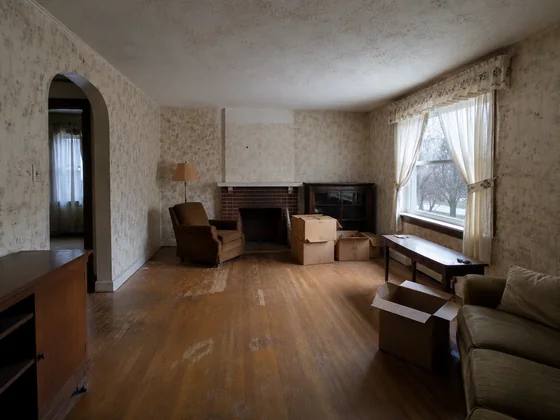
An inherited house is rarely free to hold. From the day it becomes yours, the bills keep coming: property taxes, which in Cuyahoga County are among the higher ones in Ohio, utilities you have to keep on so the pipes do not freeze, lawn care in the summer and snow in the winter. Insurance is its own problem, because a vacant home is harder and pricier to insure, and a standard policy can refuse to pay on a house that has been sitting empty. If the house sits through a Northeast Ohio winter with the heat off and a pipe bursts, the damage can swallow a big piece of what the home was worth.
Then there is the house itself. Cleveland's housing stock is old, much of it built before the 1960s, and inherited homes are often dated, packed with a lifetime of furniture, and overdue for a roof, a furnace, or wiring. If there was a reverse mortgage or an unpaid loan, that has to be dealt with too. All of this lands on heirs who are usually grieving and often live out of state. The longer the house sits while everyone figures out what to do, the more it drains the very estate it was supposed to add to.
Point-of-sale inspections: the local surprise nobody warns you about
Here is the part that catches out-of-town heirs completely off guard. Many suburbs around Cleveland require a city point-of-sale inspection before a home can change hands. An inspector walks the property and writes up code violations, anything from handrails and peeling paint to the roof, the driveway, or the garage, and those items become a repair list attached to the sale. On a well-kept newer home the list is short. On a seventy-year-old inherited house, it can run pages and cost real money.
For heirs, this can feel like a wall: the city will not let you sell the house until someone deals with the list, and nobody in the family wants to manage contractors in a house none of them live in. The good news is that in most of these suburbs the repair obligations can be assumed by the buyer through an escrow arrangement with the city. That is standard practice in a cash sale: we take the house as-is, the violations come with it, and the heirs do not fix anything. If the house you inherited is in one of these suburbs, ask about the point-of-sale requirement early, it shapes the whole plan.
When you inherit the house with your siblings
One of the most common situations, and the most delicate, is when a house is left to several children at once. Now the home has two, three, or four owners, and they may not agree. One wants to keep it as a rental, one wants to sell today, one wants to move in, and one just wants their share in cash. Because every owner has to sign to sell, a single holdout can freeze the whole thing.
A cash sale is often the fairest way to settle it, precisely because it is clean. The house sells as-is, so no one has to front repair money or manage contractors from out of town. There are no agent commissions eating into what everyone splits. And the proceeds are divided among the heirs in one closing, on a set date, so the family can settle up and move forward instead of arguing over an empty house for another year. Our related guide on selling a probate house covers the heir-and-court side in more depth.
Taxes: the stepped-up basis works in your favor
The tax question scares people more than it should. Start with the good news: Ohio has no state inheritance or estate tax. The federal estate tax only touches very large estates, well into the millions, so most families never come near it.
The part that really matters is the stepped-up basis. When you inherit a house, your tax basis is reset to the home's fair market value on the date the person died, not what they paid for it decades ago. So if the house was worth $150,000 when you inherited it and you sell it for $152,000, your taxable gain is figured from the $150,000, not from what your parents paid in 1975. Sell reasonably close to the date of death and the capital gains tax is often small or nothing at all. It is one of the biggest reasons selling an inherited home sooner rather than later can make sense. The IRS explains the rule in its guidance on the basis of inherited property. None of this is tax advice, so confirm your numbers with a tax professional.
Your options for the house
There is no single right answer. It comes down to the shape the house is in, whether the heirs agree, and how much time and money you want to put in.
- Keep it. Move in or hold it as a rental. Works when one heir wants the home and can buy out the others, and you are ready to manage upkeep, insurance, tenants, and Cleveland winters.
- Fix it up and list it. Works when there is real equity, the heirs agree, and someone has the time to clean it out, repair it, clear any point-of-sale list, and wait out a retail sale, commissions and all.
- Sell it as-is for cash. Works when the home is dated or full of belongings, the heirs just want to settle, or nobody local can manage repairs and showings. You sell in current condition and close fast.
| Your option | Best when | The trade-off |
|---|---|---|
| Keep the home | One heir wants it and can buy out the others | You take on taxes, insurance, upkeep, tenants, and winters |
| Fix up and list | There is equity, the heirs agree, and someone has time | Cleanout, repairs, and any city repair list up front, then months of waiting and commissions |
| Sell as-is for cash | The home is dated or full, or the heirs just want to settle | The price reflects condition, in exchange for speed and zero work |
Why a cash sale is often the cleanest exit
An inherited home works against a traditional sale in a few ways at once. If it is dated or needs repairs, a retail buyer's lender may refuse to finance it until the work is done, which puts the cost and the waiting right back on the heirs. If it is full of belongings, it has to be emptied before it can even be shown. If the suburb requires a point-of-sale inspection, the repair list has to be dealt with. And if several heirs share the house, coordinating repairs, showings, and signatures from different cities turns into a project no one has time for.
A cash buyer removes all of that. There is no lender and no appraisal, so the condition of the house does not block the sale. You do not repair anything, you do not clean it out, and you can leave behind whatever the family does not want. Point-of-sale violations can be assumed through escrow, so the city's list becomes our problem, not yours. Because nothing waits on financing, the closing can happen in days on a date the heirs choose, and the proceeds are split in that one closing. For a family that just wants to settle the estate and move on, that speed and simplicity is the whole point.
How Sterling Home Offer helps

We buy inherited houses for cash in Cleveland and across Northeast Ohio, and the process is familiar to us even when it is brand new to you. We make a real, no-obligation offer based on the actual house and comparable sales nearby, with its condition taken into account, not a lowball number thrown out to see if you bite. Because we pay cash, we buy the home strictly as-is, you leave whatever you do not want, and we handle the cleanout and repairs after closing. If the home is still in probate, we are used to working alongside your attorney and closing once the court gives the authority to sell, and we deal with point-of-sale inspections regularly. The goal is one clean closing that settles the estate and takes the house off your hands on a timeline that works for the family.
If you want to read more first, our guide on what selling a house as-is really means covers the basics, and how fast you can sell for cash shows what the timeline really looks like. Real seller stories are in our reviews section.
The bottom line
An inherited Cleveland house does not have to become a year of taxes, frozen pipes, city repair lists, and family standoffs. Once you know whether it needs probate and which track fits, the sale itself can be simple. Ohio's lack of an inheritance tax, plus the stepped-up basis, means selling soon often costs you little in taxes. And a cash sale lets you skip the repairs, the cleanout, the inspection list, and the showings, close in one shot, and split the proceeds among the heirs. If you would rather be done with it than carry it, get a cash offer, pick your closing date, and hand off the house.
Sell your inherited Cleveland house as-is
Tell us about the home, belongings and all. We make a no-obligation cash offer in 24 hours, buy it exactly as it is, work around probate and point-of-sale inspections if needed, and close on your timeline.
Get my cash offer or call (888) 480-5544Cleveland inherited-home FAQs
Do I have to go through probate to sell an inherited house in Cleveland?
Usually yes. If the house was titled in the deceased person's name alone, it has to pass through the county probate court, in Cleveland that is the Cuyahoga County Probate Court, before anyone has legal authority to sell it. The home can skip probate if it was held in a living trust, owned jointly with rights of survivorship, or covered by an Ohio Transfer on Death designation affidavit that names a beneficiary.
How long does probate take in Ohio?
A full administration commonly runs six months to a year, and longer when the estate is complicated or heirs disagree. Ohio also has shortcuts for small estates called release from administration and summary release from administration, which can wrap up in weeks when the estate qualifies. A probate attorney can tell you quickly which track fits your situation.
Do I owe taxes when I sell an inherited house in Ohio?
Ohio has no state inheritance or estate tax. The main question is capital gains, and inherited property gets a stepped-up basis, meaning your tax basis is the home's market value on the date the person died, not what they paid for it decades ago. If you sell reasonably soon and near that value, the taxable gain is often small or nothing. Confirm your numbers with a tax professional.
What is a point-of-sale inspection and does it apply to an inherited house?
Many Cleveland-area suburbs require a city point-of-sale inspection before a home can change hands, and the inspection often produces a list of required repairs. On an older inherited house that list can be long and expensive. In a cash sale, the buyer can typically assume the repair violations through an escrow arrangement with the city, so the heirs do not have to fix anything themselves. Ask about it up front, we deal with these inspections regularly.
Can I sell the house if I inherited it with my siblings?
Yes. When several heirs own the home together, all owners generally need to agree and sign at closing. A cash sale is often the easiest way to settle it, because the home sells as-is, there are no commissions, and the proceeds are split among the heirs in one closing instead of a year of arguments over an empty house.
This article is general information, not legal, financial, or tax advice. Probate rules, municipal inspection requirements, tax treatment, and individual situations vary and change over time. Please talk to a licensed Ohio probate attorney and a tax professional about your specific situation.