Selling a House As-Is in Cleveland: Point of Sale Inspections, Escrow, and How to Skip the Repairs
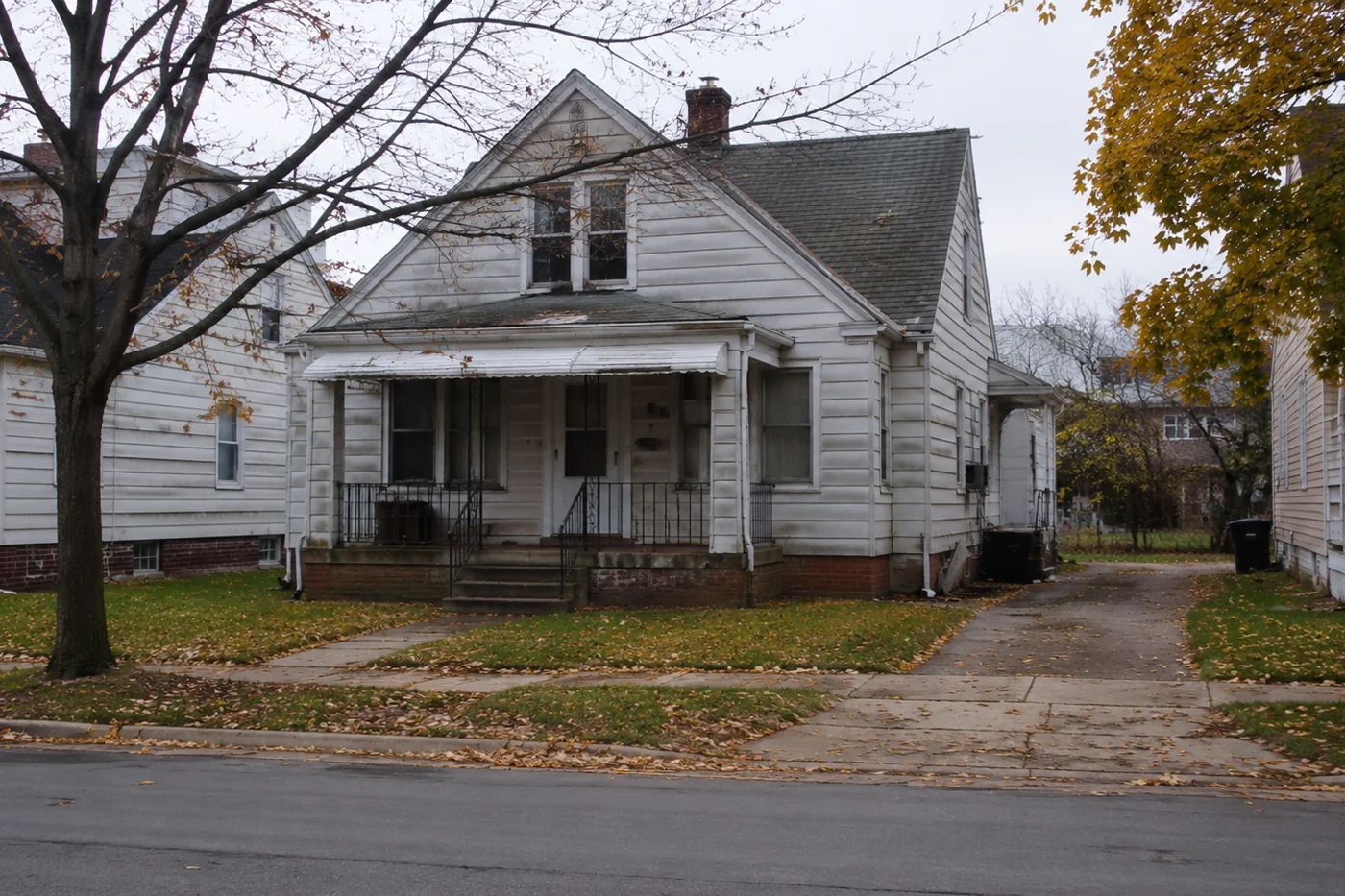
Selling a house as-is should be simple: the buyer takes the house the way it stands, and you fix nothing. In most of the country that is exactly how it works. Around Cleveland there is a wrinkle that catches people by surprise, because a ring of suburbs, places like Euclid, Cleveland Heights, South Euclid, Garfield Heights, Maple Heights and Bedford, run point of sale inspection programs. Before the house can change hands, a city inspector walks through it and hands down a list of code violations that must be dealt with as part of the sale. Owners read that list, price the repairs, and conclude they are trapped: they cannot afford to fix the house, so they cannot sell it. That conclusion is wrong. This guide explains what as-is actually means in Ohio, how the point of sale system really works, how a sale closes with open violations through escrow or an assumption agreement, and why houses that need real work almost always sell for cash.
Key highlights
- You can sell a Cleveland house as-is. Nothing in Ohio law forces you to repair a house before selling it, and a violation list from the city does not change that.
- Several inner-ring suburbs require a point of sale inspection before the home transfers. The city of Cleveland itself does not.
- A violation list does not block the sale. In most cities the repairs can be covered by an escrow holdback at closing or formally assumed by the buyer, and cash investors do this routinely.
- As-is does not mean secret. Most standard Ohio sales still use the Residential Property Disclosure Form, and concealing a known defect can come back as a fraud claim.
- Bank-financed buyers usually cannot close on a house with serious condition problems, because FHA and VA minimum property standards force repairs before closing. That is why fixer houses trade for cash.
The short answer
Yes, you can sell your Cleveland house exactly as it stands: the peeling paint, the tired roof, the furnace of uncertain age, the basement you would rather not discuss, the rooms full of thirty years of belongings. Selling as-is means the price reflects the condition and you repair nothing, clean nothing, and update nothing. If your city has a point of sale program, the inspection still happens and the violation list still gets written, but in most cities the list travels with the deal instead of blocking it: money is held in escrow out of your proceeds, or the buyer signs up to take the violations over, and the closing goes forward. The practical question is not whether you are allowed to sell as-is. It is who the right buyer is, because a house that needs work will fail a bank's rules long before it fails the city's.
What as-is really means in Ohio, and what it does not
As-is is a pricing and repair agreement, not a magic phrase. It means the buyer accepts the current condition and you are not obligated to fix or credit anything discovered later. Two things it does not mean:
- It does not erase disclosure. Most standard Ohio home sales require the seller to complete the Ohio Residential Property Disclosure Form, where you state what you actually know about the roof, water, mechanicals, and the rest. Selling as-is does not remove that form, and it never gives you permission to hide a defect you know about. Concealing a known problem is how sellers end up with fraud claims after closing. There are exemptions for certain transfers, some court-ordered, foreclosure and fiduciary sales among them, but for a normal sale, plan on filling it out honestly.
- It does not scare off serious buyers. To a cash investor, as-is is normal. We expect the roof to be the roof and the furnace to be the furnace, and the offer already reflects it. Honest answers about the house cost you nothing with a buyer whose price assumed the worst room in it.
One more federal note for Cleveland specifically: if the house was built before 1978, which describes most of the housing stock here, the buyer gets the standard lead-based paint disclosure. It is a form, not a repair obligation, and your title company or buyer will hand it to you.
Cleveland's old houses: what usually fails, and why that is normal
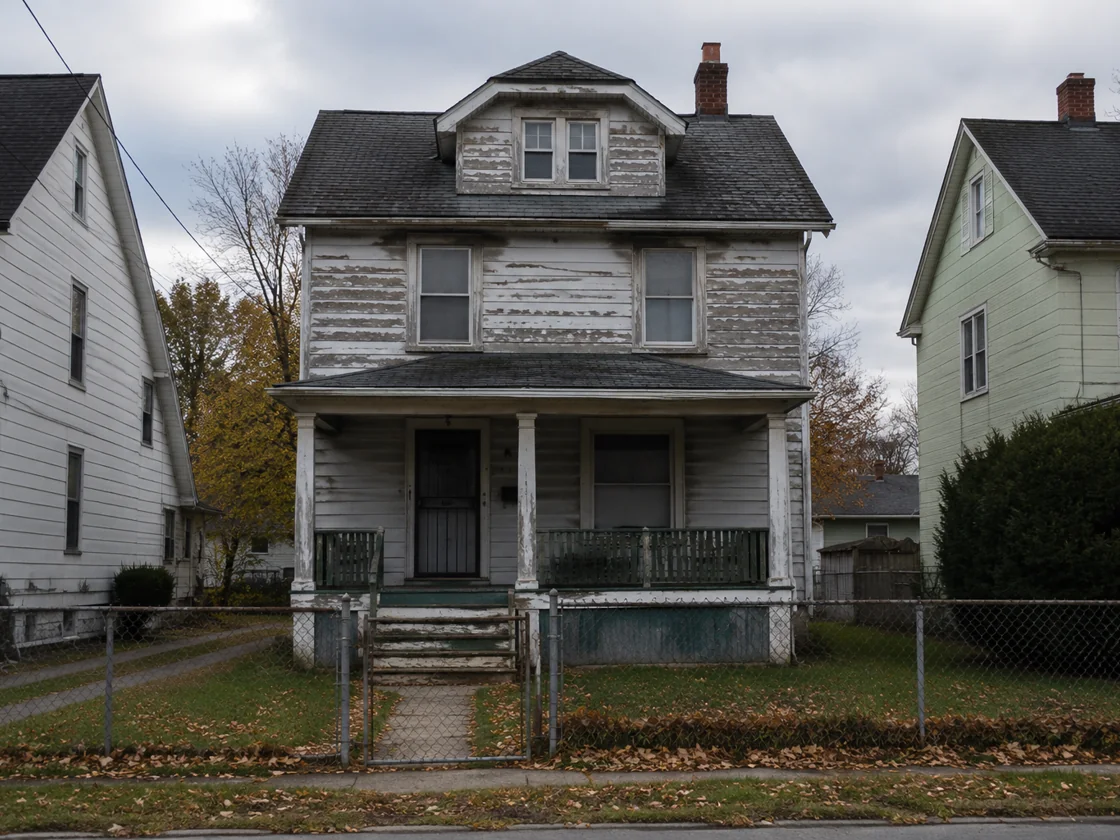
Cleveland has some of the oldest housing stock in the country. A huge share of the houses in the city and the inner-ring suburbs went up before World War II, and a house that has stood through eighty or a hundred Lake Erie winters carries the age in predictable places: the roof and gutters, the furnace and water tank, original wiring and plumbing, chipping paint on wood siding, porches and steps, moisture in the basement, a garage leaning a few degrees off plumb.
If that list sounds like your house, understand two things. First, none of it is unusual, and none of it makes the house unsellable. These are exactly the items city inspectors write up and cash buyers budget for every week. Second, the math of fixing an old house rarely favors the owner who is trying to leave it. Repairs done to sell are done at retail prices, under time pressure, on a house you no longer want, and the sale price rarely pays you back for all of them. The condition is a fact to be priced, not a wall you have to break through with your own money.
Point of sale inspections: the Cleveland-area wrinkle
Here is how the programs generally work in the suburbs that have them. When a home is going to be sold, the owner applies for a point of sale inspection, an inspector from the city walks the property, and the city issues a report listing code violations, anything from missing handrails and peeling paint to roof, electrical or driveway problems. The sale is then expected to resolve that list in one of a few ways: the seller fixes the items, money is escrowed for them at closing, or the buyer formally assumes them. The city's goal is to keep aging housing from decaying hand to hand; the practical effect for a seller is paperwork and a defined process, not a locked door.
Three things every seller in a point of sale suburb should know:
- Every city is different. Euclid, Cleveland Heights, South Euclid, Garfield Heights, Maple Heights and Bedford each run their own version, with their own fees, forms and enforcement. Some programs were revised after court challenges in recent years. Do not rely on what a neighbor did in a different suburb or a different year: call your city's building or housing department and ask what applies to your address today.
- The city of Cleveland itself is not on this list. If your house is inside Cleveland proper, there is no point of sale inspection program standing between you and a sale.
- The violation list follows the property, not the paperwork. The wrong answer is trying to slide the house to someone informally and ignore the list. The right answer is a real closing through a title company where the list is handled by escrow or assumption, in writing, so it is no longer your problem the day after closing.
Escrow and assumption: how a sale closes with open violations
This is the part that rescues sellers who cannot fund the repairs, so it is worth spelling out plainly.
The escrow route
The city estimates what the flagged repairs should cost. At closing, the title company holds that amount back, out of the sale proceeds, not out of your pocket, in an escrow account. The buyer completes the repairs on the city's timeline, the city reinspects, and the escrow pays for the work. You never wrote a check and never hired a contractor. The money simply came off the top of the price, which an as-is offer had already accounted for.
The assumption route
Many point of sale cities allow the buyer to assume the violations: the buyer signs an agreement with the city taking responsibility for the list and the deadline to clear it. For an investor who was always planning to renovate the house, assuming the list is routine, because the items on it are the renovation. This is the cleanest version for a seller: the list transfers with the house, formally and legally, and you are out.
The trap is not the inspection. The trap is trying to sell a fixer to the wrong buyer. A retail buyer with a mortgage sees the violation list and the inspection report, and their lender sees them too. That deal dies in financing week after week. A cash buyer sees the same lists, prices them into the offer, and closes through escrow or assumption without blinking.
Why bank financing dies on houses that need work
When people try to list a rough house on the open market, the failure usually is not the buyer's nerve. It is the buyer's loan. FHA and VA loans require the house to meet minimum property standards, and the appraiser is obligated to flag conditions like a deteriorated roof, peeling paint on a pre-1978 house, broken windows, missing handrails, or mechanical systems that do not run. The lender then conditions the loan on those repairs being completed before closing. If you were selling as-is precisely because you cannot fund repairs, the deal is dead, usually after weeks under contract.
Conventional loans are less strict, but the appraisal still has to support the price, and the buyer's own inspection becomes a second negotiation where the repair list you refused to do gets converted into price cuts and credits anyway. Meanwhile every week under a failing contract is another mortgage payment, another utility bill, and in winter, another month of heating an empty house so the pipes do not burst. This is not an argument against listing a house in good condition, and if yours is solid, listing it is often the right call. It is an argument about rough houses: a house that needs real work is, in practice, a cash purchase, and pretending otherwise mostly costs the seller time.
The real cost of fixing it up first
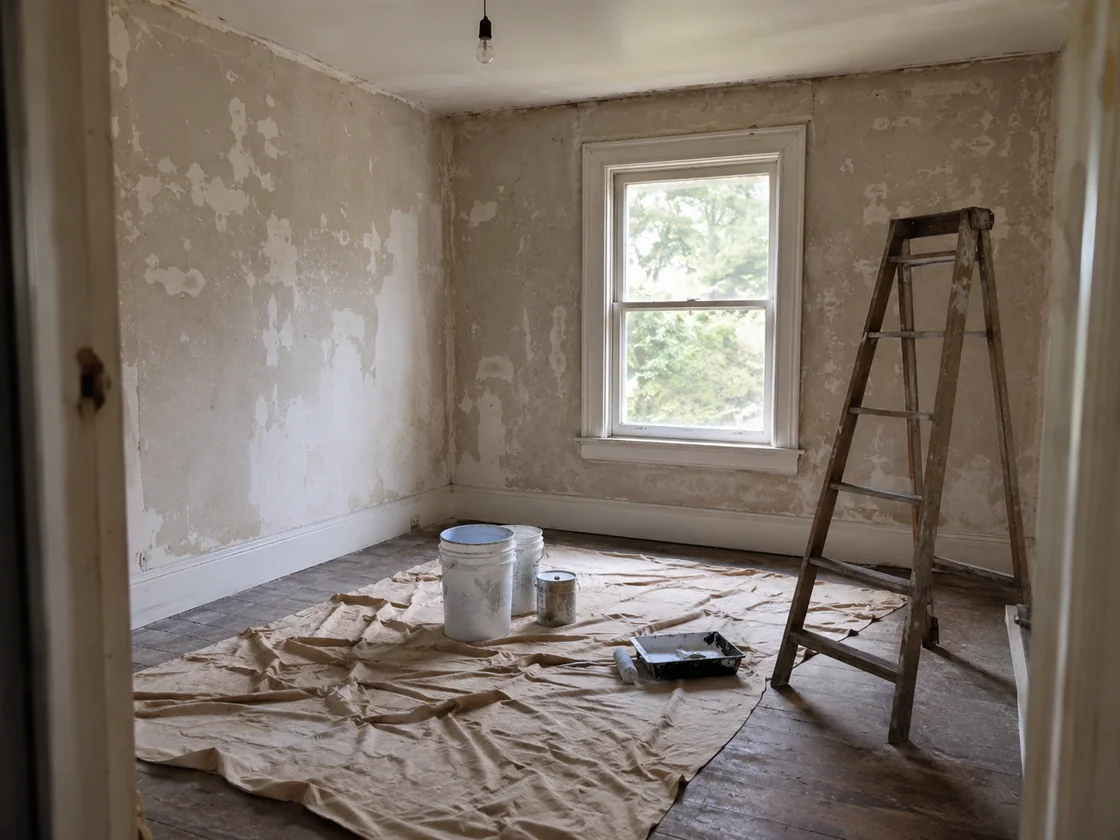
Some sellers can and should renovate before listing: if you have the cash, the time, and a house where cosmetic work will genuinely move the price, that path can net you more. Be honest about what it involves, though. A roof or a furnace on its own is a four or five figure bill. A house that has aged for decades rarely needs one repair; it needs a sequence of them, and contractors, permits and reinspections set the schedule, not you. While the work runs, the taxes, insurance and utilities keep arriving, and if the reason you are selling is a tight budget, an inheritance, or a house you already moved out of, the renovation path spends exactly the two resources you are shortest on: money and months.
The as-is math is different, and it is worth stating without spin. A cash offer on a rough house is lower than what a fully renovated version of the house would fetch, because the buyer takes on the repairs, the risk, and the carrying time. What you get in exchange is a real number, on a date you choose, with zero spent getting there. Which side of that trade is better depends on your house and your situation, not on anyone's slogan. Our guide on what cash buyers actually pay walks through the numbers honestly.
Your options, side by side
Four realistic paths for a Cleveland house that needs work:
| Your option | Best when | The trade-off |
|---|---|---|
| Renovate, then list | You have the cash and the months, and the house rewards the work | Retail-priced repairs up front, contractor schedules, carrying costs, and no guarantee the sale price pays it all back |
| List as-is with an agent | The house is decent and mostly dated, not broken | Financed buyers and their lenders still inspect, appraise and renegotiate; rough houses sit, then sell to investors anyway, minus commission |
| Sell as-is for cash | The house needs real work, there is a violation list, or you need a certain date | The price reflects the condition; in exchange, no repairs, no showings, no financing risk, and the city list handled at closing |
| Walk away and let it sit | Never | Taxes, code fines and decay keep running, the city's patience does not, and an empty Cleveland house loses value fastest of all |
Why a cash sale fits an as-is house
Everything difficult about selling a rough Cleveland house, the repairs you cannot fund, the violation list, the lender's property standards, the appraisal, the buyer who renegotiates after the inspection, comes from one source: the traditional sale assumes a house in good condition and a buyer with a mortgage. Remove the mortgage and most of the machinery of failure goes with it. There is no appraisal to support, no minimum property standards to satisfy, and no financing contingency to collapse a week before closing. The condition of the house stops being an obstacle, because it was priced in on day one.
The point of sale process, where it applies, also gets simpler with a buyer who does this constantly. An investor buyer knows your suburb's forms, expects the violation list, and is prepared to fund the escrow or assume the list, because the repairs were always part of their plan. The closing runs through a title company, the city gets its paperwork, and the obligations that were chained to you transfer, in writing, to someone whose business is clearing them.
How Sterling Home Offer helps

We buy houses in Cleveland and the surrounding suburbs strictly as-is, and houses that need work are our normal business, not an exception. Here is what that looks like in practice. You tell us about the house, honestly, and honestly is enough, because our offer is built on the real condition and real comparable sales, not on a fantasy version of the house. We make a no-obligation cash offer within about 24 hours. You repair nothing, paint nothing, and clean out nothing: take the belongings you want and leave the rest, including the ones nobody in the family wants to sort. If your suburb runs a point of sale program, we deal with the inspection paperwork and the violation list through escrow or assumption, the way we always do. And because no lender is involved, the closing lands on the date you pick, through a title company, with the proceeds wired to you.
If your situation is bigger than the house itself, we have guides for those too: selling an inherited house in Cleveland covers probate and empty-house problems, selling before foreclosure in Cleveland covers the mortgage clock, and selling with back taxes in Cleveland covers the county side. For the basics, see what selling as-is really means and how fast a cash sale really closes. Real seller stories are in our reviews section.
The bottom line
A Cleveland house that needs work is not stuck, and neither are you. Ohio lets you sell as-is, disclosure form in hand, without spending a dollar on repairs. If your suburb requires a point of sale inspection, the violation list is a document to be handled at closing, through escrow or a buyer who assumes it, not a bill you must pay before you are allowed to leave. The one honest constraint is the buyer pool: houses with real condition problems do not survive bank financing, so the practical market for them is cash. Get a real number for the house as it stands, compare it against what renovating would truly cost you in money and months, and decide with both numbers on the table. That decision is yours, and either way, the house has an exit.
Selling a Cleveland house that needs work?
We buy houses as-is across Cleveland and the suburbs, violation lists and all. No repairs, no cleanout, no agent fees, and the point of sale paperwork handled at closing. Get a no-obligation cash offer in 24 hours.
Get my cash offer or call (888) 480-5544Cleveland as-is FAQs
Can I sell my Cleveland house as-is, without making any repairs?
Yes. As-is simply means the buyer takes the house in its current condition and you agree up front that you will not repair anything. Nothing in Ohio law forces you to fix a house before selling it. What changes is who your buyer is: most bank-financed buyers cannot close on a house with serious condition problems, so as-is sales usually go to cash buyers who price the condition in and handle the repairs after closing.
What is a point of sale inspection and does my city require one?
Several Cleveland inner-ring suburbs, including Euclid, Cleveland Heights, South Euclid, Garfield Heights, Maple Heights and Bedford, have point of sale programs: before a home transfers, the city inspects it and issues a list of code violations that must be dealt with as part of the sale. The City of Cleveland itself does not run a point of sale inspection program. Rules, fees and enforcement differ city by city and have changed in recent years after court challenges, so call your own city's building or housing department and ask what applies to your address before you list.
The city gave me a violation list I cannot afford to fix. Can I still sell?
In most point of sale cities, yes. The common mechanisms are an escrow deposit, where money for the estimated repairs is held back from your proceeds at closing until the work is done, or an assumption agreement, where the buyer formally takes over the violations and the deadline to fix them. Cash investors handle both routinely. What you usually cannot do is quietly transfer the house and ignore the list, because the violations follow the property.
Do I still have to disclose problems if I am selling as-is?
Yes. In most standard Ohio home sales the seller fills out the Ohio Residential Property Disclosure Form, and selling as-is does not remove that. As-is means you will not repair anything, not that you may hide anything: concealing a known defect can still come back as a fraud claim. There are exemptions for certain transfers, such as some court-ordered and fiduciary sales. Honest disclosure actually works in your favor with a cash buyer, because the price already reflects the condition.
Why do bank-financed buyers keep falling through on houses that need work?
Because the loan, not the buyer, rejects the house. FHA and VA loans require the home to meet minimum property standards, and an appraiser will flag things like a failing roof, peeling paint on an older home, broken windows or bad mechanicals. The lender then requires those repairs before closing, which defeats the point of selling as-is. Conventional loans are more flexible but appraisal and inspection negotiations still sink many fixer deals. This is why houses that need real work are mostly bought with cash.
How fast can I sell a Cleveland house as-is for cash?
With a cash buyer there is no loan approval and no appraisal contingency, so the timeline is mostly the title work and, in point of sale suburbs, the city paperwork. Sterling Home Offer makes an offer within about 24 hours of seeing the property information, and closing is scheduled on your timeline, typically within a couple of weeks once title is clear. You take what you want from the house and leave the rest, and we handle the cleanout.
This article is general information, not legal advice. Point of sale inspection ordinances, fees, escrow rules and enforcement differ by city and change over time, and Ohio disclosure requirements have exemptions that depend on your specific transfer. Confirm the current rules with your city's building or housing department, and please talk to a licensed Ohio attorney or a title company about your specific sale before making a decision about your home.