
How to Sell a House As-Is by Owner (and When It Is Not Worth It)
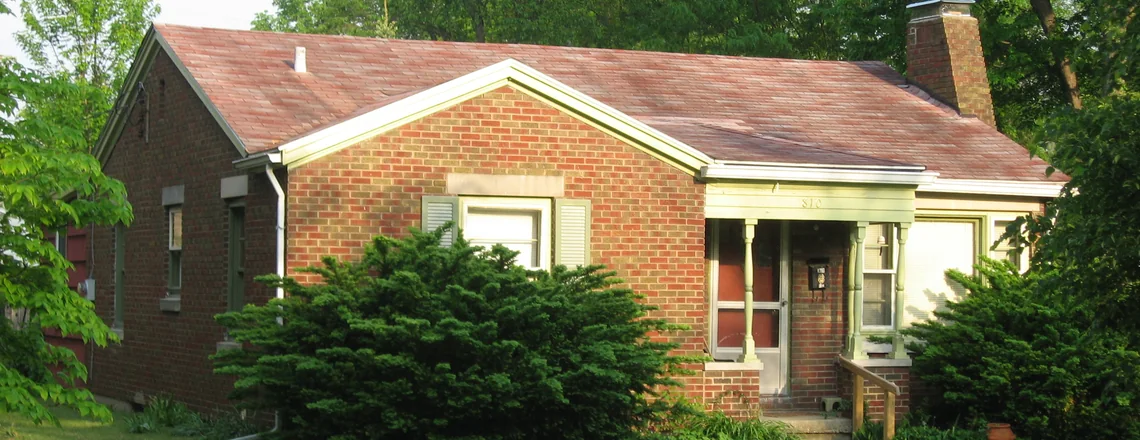
Two separate decisions get bundled into one phrase. “As-is” means you are not fixing anything before closing. “By owner” means you are not hiring an agent to run the sale. You can do both, and plenty of people do it well. But the two decisions pull against each other, and that is the part nobody explains at the start. Selling as-is shrinks your buyer pool to people who are comfortable with a project. Selling by owner makes you the one who has to find those people, price the house honestly, hand over the right disclosures, and get to a closing table with no license and no safety net. This guide covers what as-is actually gets you, the disclosure rules that stay in force no matter what the listing says, the steps in order, which repairs still pay for themselves, and the honest signs that doing it yourself is costing you more than the commission you saved.
Key highlights
- As-is is a repair position, not a secrecy license. Most states still require a written disclosure of known defects, and California law says outright that the disclosure cannot be waived in an as-is sale.
- If the house was built before 1978, the federal lead rule applies to you personally: disclosure, records, the EPA pamphlet, and a 10-day window for the buyer to test.
- Owner sales are rare and getting rarer. NAR’s 2025 survey put them at 5% of all home sales, an all-time low, and 38% of those sold to a relative, friend or neighbor.
- Some repairs really do pay back. The 2025 Cost vs. Value data shows a garage door and a steel entry door returning more than they cost, while a full kitchen does not.
- The tell that it is not working: you are negotiating repairs at every showing, or a lender and an insurer are running your calendar. That house needs a different buyer, not a lower price.
The short answer
You can sell a house as-is by owner in every state. The process is: get your numbers and documents together, price the house for its real condition, fill out your state’s seller disclosure honestly, market it, screen buyers for proof of funds, sign a purchase agreement, and let a title company or a real estate attorney handle the title search, the payoffs and the deed. Nothing about that requires a license.
What it requires is time and a tolerance for tire kickers. An as-is house cannot be financed by every buyer, so your pool is smaller and more investor-heavy than a normal listing. The seller who does this well already has a buyer in mind, or has the patience to wait for one. The seller who struggles is usually the one who needed to be gone by a date and discovered that as-is plus by owner is the slowest combination of the four.
What “as-is by owner” really means
Say the two parts out loud separately, because buyers read them separately.
As-is tells a buyer: the price reflects the condition, and I am not making repairs or giving credits after the inspection. It does not mean the buyer cannot inspect. It does not mean you can skip the paperwork. It does not stop a buyer from walking away. It is a negotiating position you state up front so nobody wastes a month. Our plain-English breakdown of the term is here: what selling a house as-is actually means.
By owner tells a buyer: there is no listing agent, so there is no listing commission. That is the saving people chase. It also means every task an agent would do is now yours: pricing, photos, listing exposure, showings, screening, negotiation, the contract, the deadlines, and the coordination with the title company. NAR’s 2025 survey of sellers found the three hardest parts of an owner sale were getting the price right (17%), selling within the time they planned (13%), and understanding and doing the paperwork (10%). Those are exactly the three tasks an as-is house makes harder. If you want the full owner-sale walkthrough, we wrote one: how to sell a house without a realtor.
As-is does not cancel your duty to disclose

This is where owner sellers get hurt, so read it twice. Writing “sold as-is” in a listing does not remove a state disclosure requirement, and in several states the law says so directly.
California puts it in the statute. Civil Code 1102.1 records the legislature’s intent that “the delivery of a real estate transfer disclosure statement may not be waived in an ‘as is’ sale,” codifying a 1993 appellate decision that said the same thing.
Ohio requires the residential property disclosure form for homes of one to four dwelling units, delivered as soon as is practicable. There is no as-is exemption and no by-owner exemption. If the buyer signs first and gets the form later, they can rescind in writing within three business days of receiving it, with an outer limit of 30 days after you accepted their offer or the closing date, whichever comes first.
Texas requires a seller of residential property with not more than one dwelling unit to give the buyer a written notice of the property’s condition “on or before the effective date” of the contract. Miss it, and the buyer “may terminate the contract for any reason within seven days after receiving the notice.” That is a seven-day free exit you handed them by being late with a form.
Then there is the federal rule that applies everywhere. For housing built before 1978, the EPA and HUD lead-based paint disclosure rule requires you to disclose known lead-based paint and hazards, hand over any records or reports you have, give the buyer the “Protect Your Family From Lead in Your Home” pamphlet, include a lead warning statement in the contract, and give the buyer a 10-day period to run a paint inspection or risk assessment unless you both agree in writing to a different window. You keep the signed disclosures for three years after the sale, and there are penalties for skipping it.
Three deadlines to write on the fridge. Federal lead rule: 10 days for the buyer to test a pre-1978 house. Texas: the condition notice is due on or before the effective date of the contract, or the buyer gets 7 days to walk. Ohio: 3 business days to rescind after a late disclosure form, capped at 30 days from acceptance or the closing date.
Your state may run on different numbers. Look up your own form before you sign anything, because the buyer’s escape hatch is usually built out of your missed paperwork.
The step by step
Here is the order that actually works, assuming you are keeping the house as-is.
- Pull your own numbers first. Mortgage payoff, any liens, back taxes, HOA dues, and what you owe versus what the house is plausibly worth in its current shape. If the math does not leave you anything, you need that news now, not in week six.
- Gather the documents. Deed, most recent tax bill, any survey or plat, permits for past work, old inspection or roof reports, HOA papers, and utility history. Buyers of as-is houses ask for these, and having them ready is half your credibility.
- Get an honest condition read. Some sellers pay for a pre-listing inspection. It costs a few hundred dollars and it turns arguments into a known list. You still do not have to fix anything. You just stop being surprised.
- Price it for the condition, not for the neighborhood. Pull recent sales of houses in similar shape, not the renovated flip two streets over. This is the step owners most often get wrong.
- Fill out the disclosures. Your state form plus the federal lead package if the house predates 1978. Write down what you know. Do not guess and do not speculate about what you do not know.
- Market it. Yard sign, a flat-fee MLS listing if you want financed buyers to see it, real photos taken in daylight, and a description that says “as-is” and names the known problems instead of hiding them.
- Screen every buyer. Proof of funds for cash, a real preapproval letter for financed. Anyone who will not show you either is not a buyer yet. Our guide on spotting cash-buyer scams covers the red flags worth memorizing.
- Use a real purchase agreement. Your state’s standard residential contract form, with the as-is language and the inspection terms spelled out. If you are not sure, an attorney reviewing one contract is cheap compared to what a bad one costs.
- Open title and let the professionals close it. A title company or closing attorney runs the search, clears liens and back taxes out of your proceeds, prepares the deed and the settlement statement, and handles the money. You sign and hand over keys.
Should you fix anything first?

If you are committed to as-is, skip this section. If you are still deciding, the 2025 Cost vs. Value data from Remodeling and Zonda is the least emotional way to look at it. National averages, so treat them as direction rather than gospel, but the pattern is consistent year after year: cheap exterior jobs beat expensive interior ones.
- Garage door replacement: $4,672 average cost, $12,507 in resale value, about 268% recouped.
- Steel entry door replacement: $2,435 cost, $5,270 resale value, about 216% recouped.
- Minor kitchen remodel: $28,458 cost, $32,141 resale value, about 113% recouped.
- Vinyl siding replacement: $17,950 cost, $17,313 resale value, about 97% recouped.
Two things fall out of that list. First, curb appeal is cheap and it pays. If you have a weekend and a small budget, the front of the house is where it goes. Second, the big-ticket items people agonize over, the full kitchen, the bathroom gut, are the ones most likely to eat your money and your calendar while the house sits.
There is also a hard version of this question. If the roof is at the end of its life, or the electrical panel is one an insurer will refuse, you are not choosing between a nicer house and a plainer house. You are choosing between a house a financed buyer can buy and one they cannot, because no mortgage closes without an insurance policy. That is usually the moment an as-is sale stops being a preference and becomes the actual plan.
Pricing it and finding a buyer on your own
NAR’s 2025 Profile of Home Buyers and Sellers put for-sale-by-owner deals at 5% of all home sales, an all-time low, with a record 91% of sellers using an agent. The detail that matters more than the headline: 38% of those owner sellers said the main reason they went it alone was that they already had a buyer, a relative, a friend or a neighbor. Take those out and the number of people who found a stranger on their own is small.
The same report shows owner sales at a median price of $360,000 against $425,000 for agent-assisted sales. Do not read that as a $65,000 penalty for skipping an agent. It is not a like-for-like comparison: owner sales skew toward smaller, older, rural and family-transfer houses, which are cheaper to begin with. What is fair to take from it is the softer finding, that 64% of owner sellers said they did not get the price they wanted, and that pricing was the single hardest part of the job.
So price it against houses in the same condition that actually closed, not against listings. Then expect your buyers to be a narrower group than usual: investors and flippers who do this every week, contractors and handy owner-occupants, neighbors and family, and the occasional buyer with cash and patience. A conventional buyer with 5% down and a lender is often not able to buy an as-is house even when they want to.
Your options, side by side
Four honest routes for a house you do not want to repair:
| Your route | Best when | The trade-off |
|---|---|---|
| As-is, by owner | You already have a buyer in mind, or you have time, patience and no hard deadline | You do every job yourself: pricing, exposure, screening, contract, deadlines. Pricing and paperwork are where owner sellers report the most trouble |
| As-is, listed with an agent | The house is dated but financeable, and you want the MLS buyer pool without doing the work | Commission comes out of your proceeds, inspections still happen, and rough houses tend to sit and then sell to an investor anyway |
| Repair first, then list | The problems are cosmetic or cheap exterior fixes, and you can fund the work and the wait | Money and months up front, contractor scheduling, and only some jobs return what they cost at resale |
| Sell as-is direct to a cash buyer | The condition, the timeline or the distance makes a financed sale unrealistic, or you just want it finished | The price reflects the work left in the house. In exchange: no repairs, no cleanout, no showings, no lender, closing in weeks |
When selling as-is by owner is not worth it
Being honest about this is more useful than cheerleading. Stop and rethink if any of these describe you.
- You have a deadline. A job start date, a divorce decree, a foreclosure sale date, a probate schedule. As-is by owner is the slowest of the four routes because you are doing the marketing yourself into the smallest buyer pool.
- Every showing turns into a repair negotiation. If buyers keep asking for credits you already said you would not give, they are telling you the price and the condition are not matched yet.
- Your buyers keep needing a lender. When the deal depends on an appraisal and an insurance binder for a house with an old roof, you are not really selling as-is. You are waiting for someone else’s underwriter to say no.
- You live three states away. Showings, mowing, mail, break-ins and utility bills do not manage themselves from a distance, and the carrying costs quietly eat the commission you saved.
- The paperwork is making you nervous. Disclosure mistakes are the expensive kind. If you are guessing at your state’s form or the lead rule, get an attorney or change routes.
- The house is a real project. Fire or water damage, hoarding, structural movement, open permits. Those houses have one natural buyer type, and you can go to that buyer directly instead of hoping one drives past your sign.
Selling as-is direct for cash
If the list above sounded familiar, the direct route is worth a look, and it is fine to use it as a benchmark even if you end up selling yourself. The mechanics are simple. You describe the house honestly, condition and all, and get a written cash offer. If you accept, a title company runs the search, clears liens and back taxes out of the proceeds, and prepares the deed. There is no lender, so there is no appraisal, no financing contingency and no insurance underwriter with a vote. Closing lands on the date you pick, often within a few weeks once the title is clean.
You still disclose what you know. Nothing about a cash sale removes that, and a serious buyer wants the disclosure signed as much as you do. What changes is that the condition stops being a deal-breaker and becomes a line in the price. Two guides go deeper: how selling to a cash home buyer works, step by step, and what percentage of value cash buyers actually pay, so you can judge whether a number in front of you is fair. If you want the two routes lined up on net proceeds rather than headline price, read cash offer vs. listing with a realtor.
How Sterling Home Offer helps
We buy single-family houses for cash, as-is, and the houses other buyers call problems are our normal week. Here is what that looks like in practice. You tell us about the house and we give you a no-obligation written offer, usually within about 24 hours, based on real condition and real comparable sales. Strictly as-is means what it says: no repairs, no cleanout, no staging, no showings. Take what you want to keep and leave the rest. There are no agent commissions and no fees on our side, so the offer is the number you are comparing against. And you pick the closing date, whether that is as soon as the title work allows or parked until your move, your probate or your court date is ready. If our number does not beat what you think you can do on your own, sell it on your own. Knowing the floor makes the decision easier either way.
The bottom line
Selling as-is by owner is a legitimate way to sell a house, and for someone with a buyer already lined up it is the obvious one. For everyone else it is two hard modes stacked on top of each other: the smallest buyer pool and no one running the process but you. Do it with your eyes open. Fill out the disclosure honestly, because that piece of paper is what protects you. Price the house for the shape it is in. And set a date on the calendar where, if the phone has not rung, you stop and compare a direct cash offer against what another three months of carrying costs will do to your number.
Want to know what your as-is house is worth before you do this alone?
We buy houses for cash in any condition: old roofs, dated kitchens, full garages, inherited houses. No repairs, no fees, no showings. Get a no-obligation cash offer in 24 hours and pick your closing date.
Get my cash offer or call (888) 480-5544Selling as-is by owner: FAQs
Can I sell as-is without telling buyers what is wrong with the house?
No. Selling as-is sets expectations about repairs, not about honesty. Most states require a written seller disclosure of known defects, and several say plainly that an as-is clause does not erase it. California Civil Code 1102.1 states the legislature’s intent that delivery of a transfer disclosure statement may not be waived in an as-is sale. Ohio requires the residential property disclosure form for one to four unit homes with no exemption for as-is deals. Texas requires a written notice of the property’s condition on or before the effective date of the contract. On top of that, the federal lead rule applies to almost any home built before 1978 regardless of condition.
What paperwork do I need to sell a house by owner?
At minimum: a written purchase agreement on a form that is valid in your state, your state’s seller disclosure form, the federal lead-based paint disclosure and pamphlet if the house was built before 1978, your deed and mortgage payoff information, the most recent property tax bill, and any HOA documents. A title company or a real estate attorney handles the title search, the deed preparation, the payoff of liens and the settlement statement. In NAR’s 2025 survey, understanding and doing the paperwork was one of the three hardest parts of an owner sale.
Do I have to let a buyer inspect the house if I am selling as-is?
You are not obligated to fix what an inspection finds, but refusing to allow one costs you most of your buyers. For homes built before 1978 the federal lead rule requires you to give the buyer a 10-day period to run a lead paint inspection or risk assessment, unless both sides agree in writing to a different window. Letting a buyer inspect and then declining to repair is the normal shape of an as-is sale, and it is safer for you than a buyer who discovers the problem after closing.
How much less does an as-is house sell for?
There is no single discount, because the discount is the work. A buyer prices the roof, the systems, the cleanout and their own risk, then subtracts. The condition of the house drives the number far more than the words in the listing. Our breakdown of how cash offers are calculated walks through the ranges by condition tier. What is fair is a number you can trace to real repair costs and real comparable sales, not a number that shrinks at the closing table.
Does an as-is clause protect me from being sued after closing?
Not from claims about things you knew and hid. An as-is clause generally protects you from a buyer who is unhappy about a defect they could see or could have found. It does not protect you from a claim that you concealed a known material problem, which is why the written disclosure is the document that actually protects you. Fill it in honestly and keep a signed copy. The federal lead rule requires you to keep signed lead disclosures for three years after the sale.
When should I stop trying to sell it myself?
When the calls stop, when every showing turns into a repair negotiation you did not plan to have, when a financed buyer’s lender or insurer is the one deciding your timeline, or when the carrying costs of another three months outweigh what you are saving on commission. Those are the signals that the house needs a different buyer, not a different price. A direct cash sale closes in weeks with no repairs and no showings, and you can compare that number to what you would net on your own before you decide.
Sources
- National Association of Realtors, 2025 Profile of Home Buyers and Sellers: FSBOs reach an all-time low
- U.S. EPA, Real Estate Disclosures About Potential Lead Hazards (Lead-Based Paint Disclosure Rule, Section 1018 of Title X)
- California Civil Code 1102.1, disclosure may not be waived in an “as is” sale
- Ohio Revised Code 5302.30, Residential Property Disclosure Form and rescission rights
- Texas Property Code 5.008, Seller’s Disclosure of Property Condition
- Remodeling and Zonda, 2025 Cost vs. Value Report, national averages
This article is general information, not legal, tax or real estate advice. Seller disclosure requirements, contract forms and closing practices differ by state and change over time, and every sale is different. Confirm your own situation with a licensed professional in your state before making decisions about your home.